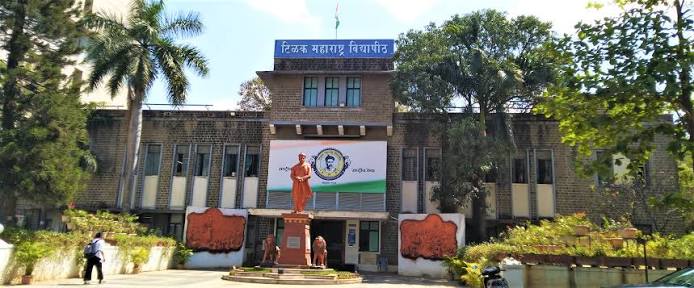
Tilak Maharashtra Vidyapeeth (TMV) is a historic higher-education institution in Pune, established in 1921 in memory of Lokmanya Bal Gangadhar Tilak. The institution received Deemed to be University status in 1987 under Section 3 of the UGC Act, 1956. Over the years, TMV has expanded from its traditional strengths in Sanskrit, Ayurveda and social sciences into areas such as computer science, management, law, journalism, digital arts, hotel management, physiotherapy and health sciences.
1. Basic Information
| Particular | Details |
|---|---|
| University Name | Tilak Maharashtra Vidyapeeth |
| Common Name | TMV |
| Location | Pune, Maharashtra |
| Established | 1921 |
| Status | Deemed to be University |
| Deemed University Status | 1987 |
| UGC Status | Deemed to be University under Section 3 of UGC Act, 1956 |
| NAAC Accreditation | B++, CGPA 2.88; Cycle 3, validity reported up to 26 July 2029 |
| Main Campus | Gultekdi, Mukundnagar, Pune |
| PIN Code | 411037 |
| Academic Areas | Ayurveda & Yoga, Sanskrit & Indology, Social Sciences, Computer Science, Management, Commerce, Law, Journalism, Digital Arts, Hotel Management, Physiotherapy, Social Work and skill-based education |
| Major Study Levels | Undergraduate, Postgraduate, Diploma, PG Diploma and Ph.D. |
| Official Website | tmv.edu.in |
TMV’s latest AQAR records its Cycle 3 NAAC accreditation as B++ with CGPA 2.88, with validity from 27 July 2024 to 26 July 2029.
2. Location & Campus
Tilak Maharashtra Vidyapeeth is located at Gultekdi, Mukundnagar, Pune – 411037. The campus is positioned within Pune’s established educational environment and provides access to academic facilities, library resources, student activities and specialised departments.
The institution has developed considerably since receiving deemed university status. Its academic structure currently covers a wide range of disciplines through multiple Boards of Studies and specialised departments.
An important feature of TMV is that its academic identity combines traditional Indian knowledge systems with modern professional and applied disciplines. Ayurveda, Yoga, Sanskrit and Indological Studies sit alongside computer science, management, law, journalism, digital arts and hospitality.
3. Admission Information
TMV conducts admissions across its undergraduate, postgraduate, professional, diploma and research programmes. The university currently has admission information and programme details for the 2026–27 academic cycle, while its website also publishes entrance examination results and programme-specific notices.
The admission process depends on the programme.
Students may need to:
- Check programme-specific eligibility.
- Submit the university admission application.
- Appear for an entrance examination where applicable.
- Participate in merit-based or programme-specific selection.
- Complete document verification.
- Pay the prescribed admission and tuition fees.
For example, TMV’s current B.A. LL.B. programme requires 10+2/equivalent with 45% marks, with specified relaxations for OBC and SC/ST candidates, and has an intake of 120.
The BPT programme currently requires 12th Science with PCB and 50% marks, along with NEET-UG and TMV Entrance requirements specified by the university.
Therefore, Admission Katta should maintain programme-level admission requirements rather than presenting one common admission rule for the entire university.
4. Undergraduate Programmes
TMV offers undergraduate programmes across traditional, professional and emerging disciplines. The university’s current programme structure includes areas such as computer science, management, commerce, law, journalism, hotel management, physiotherapy, Ayurveda and social sciences.
Major Undergraduate Areas
- B.A.
- B.A. English
- B.A. Social Sciences
- B.A. Yoga
- B.Com.
- B.B.A.
- B.C.A.
- B.Sc. Computer Science
- B.Sc. Data Science
- B.Sc. Artificial Intelligence / Data Science & AI
- B.Sc. Artificial Intelligence & Machine Learning
- B.Sc. Cyber Security
- B.A. LL.B.
- B.B.A. LL.B.
- B.Sc. / programmes in Hotel Management, Hospitality and Tourism
- B.Sc. Culinary Arts
- B.P.T.
- B.Sc. Nursing
- Journalism and Mass Communication programmes
- Digital Arts programmes
- Sanskrit and Indological Studies programmes
The university’s current examination records also show active programmes in BCA, B.Sc. Data Science, Data Science & AI, B.Sc. AI & ML and Cyber Security, demonstrating TMV’s expansion into technology-oriented education.
5. Postgraduate Programmes
TMV has a broad postgraduate portfolio spanning humanities, social sciences, management, technology, law, library science, Ayurveda and other professional disciplines.
Major Postgraduate Areas
- M.A. Social Sciences
- M.A. Marathi
- M.A. Hindi
- M.A. English
- M.A. Japanese
- M.A. Sanskrit
- M.A. Indology
- M.A. Yoga
- M.Com.
- M.B.A.
- M.S.W.
- M.Sc. Computer Applications
- M.Sc. / programmes in Nutrition & Food Science
- M.J. / Journalism
- M.Lib.I.Sc.
- M.P.T.
- LL.M.
- Other specialised postgraduate programmes
TMV’s official programme information identifies postgraduate education in areas including M.Sc. Computer Applications, MBA, MSW, LLB/LLM, Journalism, Library Science, social sciences, languages, Ayurveda and commerce.
The university’s current examination information also shows active M.A. language, M.A. Social Science, M.Com., MBA, MPT, LL.M. and Ayurveda-related programmes.
6. Ph.D. / Research Programmes
Research is an important part of TMV’s academic structure.
The university has recognised research activity across several disciplines, including:
- Ayurveda
- Sanskrit
- Indology
- Economics
- Sociology
- Political Science
- History
- Social Sciences
- Management and related areas
- Other specialised academic disciplines
TMV’s Social Sciences department identifies Ph.D. programmes in Economics, Sociology, Political Science and History, while the university also maintains a dedicated Lokmanya Tilak Centre for Research & Development.
The Ayurveda faculty also currently lists Ph.D. in Ayurveda, with a 2026–27 entrance syllabus covering English, general computer knowledge, research methodology and subject-specific components.
TMV’s Sanskrit and Indological Studies department has a long-standing doctoral tradition and states that it introduced Vidyavachaspati (Ph.D.) in Sanskrit and Indology after receiving deemed university status.
7. University Departments & Academic Areas
TMV’s current academic structure covers a particularly diverse combination of traditional and contemporary subjects. The university website identifies the following major departments/academic areas.
Ayurveda & Yoga
One of TMV’s historic academic strengths, combining Ayurveda, Yoga, nutrition and research into traditional health systems.
Sanskrit & Indological Studies
Focuses on Sanskrit language, literature, Indian knowledge traditions and Indology. The department has been associated with TMV since the establishment of Shri Balmukund Sanskrit Mahavidyalaya in 1948.
Social Sciences
Includes areas such as Economics, Sociology, Political Science and History, with both postgraduate and doctoral research.
Computer Science
Includes BCA and newer programmes involving Data Science, Artificial Intelligence, Machine Learning and Cyber Security.
Management & Commerce
Includes BBA, MBA, B.Com., M.Com. and related management-oriented programmes.
Law
TMV offers B.A. LL.B., B.B.A. LL.B., LL.B. and LL.M. programmes, with current 2026–27 syllabi published for its law courses.
Journalism & Mass Communication
Provides education in journalism, media and communication-related areas.
Digital Arts
A contemporary academic area covering digital and creative disciplines.
Hotel Management & Tourism
Includes hotel management, hospitality, culinary arts and tourism-oriented programmes. TMV’s current examination schedule includes B.Sc. Aviation Hospitality and Travel Tourism, B.Sc. Culinary Arts and Hotel Management programmes.
Physiotherapy & Health Sciences
TMV has physiotherapy and nursing-related academic activities, although some institutions under the TMV trust are specifically listed as affiliated to Maharashtra University of Health Sciences (MUHS).
8. Campus & Facilities
Library
The TMV library provides resources for students, faculty and researchers across the university’s academic disciplines.
Its facilities include:
- Reading hall
- Periodicals section
- Internet facility
- Institutional repository
- Digitised manuscripts
- Shodhganga-related research resources
- Inter-library loan facility
- Braille books
- Low-vision kits
The library also provides access to researchers from other institutions for selected resources and theses.
Research Facilities
TMV maintains a dedicated research structure through the Lokmanya Tilak Centre for Research & Development, along with research activity across its academic departments.
Student Activities
The university encourages cultural and co-curricular activities through student committees. Guest lectures are also organised with professionals and academics from education, management, Indology, social sciences, health sciences, social work, history, economics, politics and law.
Personality Development
TMV also provides personality-development and communication initiatives, including language-learning support and a language laboratory.
9. Affiliated Colleges / Student Life / Career Opportunities
Affiliated / Constituent Institutions
TMV’s structure needs to be handled carefully in the Admission Katta database.
The university itself offers programmes through its own departments, while the TMV trust also lists institutions such as:
- Institute of Nursing Education and Research
- Indutai Tilak College of Physiotherapy
- Lokmanya Tilak College of Physiotherapy, Kharghar
- Lokmanya Tilak Institute of Pharmacy, Pune
- Lokmanya Tilak Institute of Pharmacy, Kharghar
- Other educational institutions
The university’s own website explicitly identifies the nursing and Indutai Tilak College of Physiotherapy institutions as affiliated to MUHS.
Therefore, these institutions should not automatically be counted as colleges affiliated to TMV in Admission Katta.
Student Life
TMV provides a mix of academic and extracurricular opportunities. Its distinctive feature is the combination of:
- Traditional Indian knowledge
- Professional education
- Modern technology
- Social sciences
- Healthcare
- Law
- Management
- Media
- Hospitality
- Creative arts
This makes the institution particularly diverse compared with a narrowly specialised university.
Career Opportunities
Depending on the programme, graduates can pursue careers in:
- IT and software
- Data science and analytics
- Artificial intelligence
- Cyber security
- Management and business
- Banking and commerce
- Law and legal services
- Journalism and media
- Hospitality and tourism
- Physiotherapy and healthcare
- Ayurveda and wellness
- Social work
- Education
- Research and academia
- Sanskrit, Indology and cultural studies
- Government and public-sector organisations
For Admission Katta, career information should ideally be connected to individual programmes, because career outcomes vary significantly between BCA, BBA, BPT, law, Ayurveda, journalism, Sanskrit and other programmes.
Maps
Photos