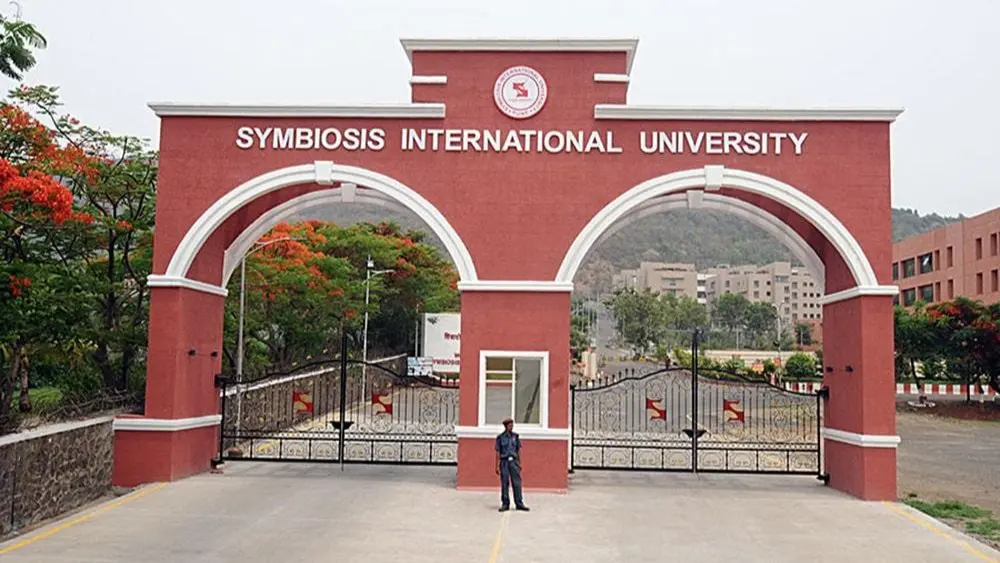

Symbiosis International (Deemed University), commonly known as SIU, is a multidisciplinary deemed-to-be university headquartered at Lavale, Pune. Its academic ecosystem covers law, management, computer studies, health sciences, media and communication, humanities and social sciences, engineering, design, architecture and education.
The Symbiosis educational movement began in 1971 under Prof. Dr. S. B. Mujumdar, initially with the objective of providing a “home away from home” for international students. Symbiosis International received Deemed to be University status in 2002 under Section 3 of the UGC Act, 1956.
1. Basic Information
| Particular | Details |
|---|---|
| University Name | Symbiosis International (Deemed University) |
| Common Name | Symbiosis International University / SIU |
| Headquarters | Lavale, Pune, Maharashtra |
| Symbiosis Established | 1971 |
| Deemed University Status | 2002 |
| Founder | Prof. Dr. S. B. Mujumdar |
| Status | Deemed to be University |
| UGC Status | Deemed to be University under Section 3 of the UGC Act, 1956 |
| NAAC Accreditation | A++ Grade |
| UGC Category | Category-I / Grade-I |
| Academic Model | Multidisciplinary, constituent-institute model |
| Institutes | 46 institutes listed on the current admission portal |
| Cities in India | 6 |
| International Campus | Dubai, UAE |
| Research Centres | 13 |
| Global Representation | Students from 85+ countries |
| Major Faculties | Law, Management, Computer Studies, Medical & Health Sciences, Media & Communication, Humanities & Social Sciences, Engineering, Design, Architecture and Education |
| Official Website | siu.edu.in |
The current SIU admission portal lists 46 institutes, 6 Indian cities, 130+ programmes and 13 research centres, along with an international campus in Dubai.
SIU’s official research and accreditation material identifies the university as re-accredited by NAAC with A++ Grade and awarded Category-I by UGC.
2. Location & Campus
The main university campus of Symbiosis International is located at Lavale, Taluka Mulshi, Pune, Maharashtra – 412115. The Lavale campus forms the centre of the university’s multi-institute academic ecosystem. Official university material describes the campus as being spread across 400+ acres.
SIU’s academic presence, however, extends well beyond Lavale. Its current programmes are delivered through institutes located across Pune, Nashik, Bengaluru, Hyderabad, Nagpur, Noida and other locations, while the university also has an international campus in Dubai.
This multi-campus structure is particularly important for students. A student applying to SIBM Pune, Symbiosis Law School Pune, Symbiosis Institute of Technology, Symbiosis School of Economics or another SIU institute is effectively applying to a specific constituent institute and programme, not simply to one generic university campus.
3. Admission Information
Symbiosis International follows programme-specific admission processes.
For many undergraduate programmes, the Symbiosis Entrance Test (SET) is used, while many postgraduate management programmes use the Symbiosis National Aptitude Test (SNAP). The university’s research centre explicitly cautions applicants that admissions are based on merit and the prescribed university process, including SET for undergraduate studies and SNAP for postgraduate studies where applicable.
The 2026–27 academic cycle is active, with current academic calendars covering programmes across law, management, economics, liberal arts, statistics, engineering, design, media, health sciences and other disciplines.
Depending on the programme, admission may involve:
- SET
- SNAP
- Programme-specific entrance examinations
- Personal interaction/interview
- Writing or skill assessment
- National-level examinations where applicable
- Academic merit and eligibility
- Programme-specific selection procedures
For example, management admissions at institutes such as SIBM Pune follow the SNAP-based Symbiosis admission process, while undergraduate programmes such as BBA, Economics, Liberal Arts, Law, Design and Engineering have their own programme-specific requirements.
Students should always verify the current admission notification before applying because entrance tests, eligibility, selection stages, dates and seat availability can vary by institute.
4. Undergraduate Programmes
SIU has a substantial undergraduate portfolio covering business, law, economics, liberal arts, media, design, engineering, computer studies, statistics, health sciences and other disciplines.
Major Undergraduate Programmes
- BBA
- BBA Honours / Honours with Research
- B.Sc. Economics
- B.A. Liberal Arts
- B.Sc. Liberal Arts
- B.A. LL.B. (Hons.)
- B.B.A. LL.B. (Hons.)
- B.Com. LL.B. (Hons.)
- B.Tech
- BCA
- B.Sc. Applied Statistics & Data Science
- B.A. Mass Communication
- BBA Media Management
- B.A. Visual Arts & Photography
- B.Des.
- B.Arch.
- Health-science and paramedical programmes
- Other specialised undergraduate programmes
The current 2026–27 academic calendar confirms active undergraduate programmes in areas including law, management, economics, liberal arts, statistics/data science, engineering, design, media and visual arts.
Engineering
The Symbiosis Institute of Technology (SIT), Pune currently offers B.Tech programmes in areas including:
- Computer Science & Engineering
- Artificial Intelligence & Machine Learning
- Civil Engineering
- Electronics & Telecommunication Engineering
- Mechanical Engineering
- Robotics & Automation
- Robotics & Artificial Intelligence
SIT also operates campuses in Nagpur and Hyderabad with their own programme offerings.
5. Postgraduate Programmes
Postgraduate education is one of SIU’s largest academic segments, particularly in management, law, technology, economics, international studies, media, health sciences and data-related fields.
Management
Major programmes include:
- MBA
- MBA Business Analytics
- MBA Innovation & Entrepreneurship
- MBA International Business
- MBA Agri Business
- MBA Sustainability Management
- MBA Infrastructure Development & Management
- MBA Operations Management
- MBA Communication Management
- MBA Healthcare & Hospital Management
- MBA IT / Technology-related specialisations
- MBA Executive programmes
The current 2026–27 academic calendar lists MBA programmes across institutes such as SIBM Pune, SCMHRD, SIIB, SIMS, SIBM Bengaluru, SIBM Nashik and other centres.
Other Major PG Programmes
- M.Sc. Economics
- M.Sc. Applied Statistics
- M.Sc. Applied Statistics & Data Science
- M.Sc. Data Science & Spatial Analytics
- M.Sc. Geoinformatics
- M.Tech programmes
- LL.M.
- M.A. International Studies
- M.A. Film, Television & Digital Production
- M.A. Journalism & Media Industries
- M.A. Communication-related programmes
- M.Des.
- M.A./M.Sc. Liberal Arts
- Health sciences and public health programmes
- Education programmes
- Other specialised postgraduate programmes
The university’s 2026–27 programme calendar confirms these offerings across its constituent institutes.
6. Ph.D. / Research Programmes
Research is an important component of SIU’s academic structure.
The Symbiosis Centre for Research & Innovation (SCRI) coordinates doctoral research across the university. Current Ph.D. faculties include:
- Faculty of Law
- Faculty of Management
- Faculty of Computer Studies
- Faculty of Medical & Health Sciences
- Faculty of Media & Communication
- Faculty of Humanities & Social Sciences
- Faculty of Engineering
- Faculty of Architecture & Design
- Faculty of Education
SIU offers both full-time and part-time Ph.D. programmes, with doctoral study conducted through recognised research areas and supervisors. The current Ph.D. information requires a relevant postgraduate qualification, generally with 55% marks, subject to the applicable rules.
The university currently lists 13 research centres on its admissions portal, highlighting the scale of its research ecosystem.
7. University Departments & Academic Areas
SIU’s academic structure is organised around specialised faculties and constituent institutes rather than conventional university departments alone.
Faculty of Law
Includes institutes such as:
- Symbiosis Law School, Pune
- Symbiosis Law School, Noida
- Symbiosis Law School, Nagpur
Programmes include integrated law degrees and LL.M. programmes.
Faculty of Management
This is one of SIU’s most prominent academic areas, with institutes including:
- SIBM Pune
- SCMHRD
- SIIB
- SIMS
- SIBM Bengaluru
- SIBM Nashik
- SIBM Noida
- Other management institutes
Faculty of Computer Studies
Includes programmes in:
- Computer applications
- Information technology
- Data sciences
- Digital transformation
- Business technology
Faculty of Medical & Health Sciences
Includes health sciences, public health, hospital and healthcare management, paramedical education and other healthcare-oriented programmes.
Faculty of Media & Communication
Includes:
- Mass communication
- Media management
- Journalism
- Film and television
- Digital production
- Communication management
Faculty of Humanities & Social Sciences
Includes:
- Economics
- Liberal arts
- International studies
- Social sciences
- Related interdisciplinary areas
Faculty of Engineering
Includes:
- Computer Science
- AI & ML
- Robotics
- Civil Engineering
- Mechanical Engineering
- Electronics & Telecommunication
- Geoinformatics
Faculty of Design / Architecture
Includes:
- Design
- Visual arts
- Photography
- Architecture
- Creative and applied design programmes
Faculty of Education
SIU also has academic programmes and research in education and teacher development.
The current university admission portal identifies the major academic faculties and describes SIU as a multidisciplinary university offering doctoral, postgraduate, undergraduate, diploma and certificate programmes.
8. Campus & Facilities
Academic Infrastructure
SIU’s campuses are designed around specialised constituent institutes. Facilities vary by institute but include:
- Modern classrooms
- Laboratories
- Computer centres
- Libraries
- Research facilities
- Auditoriums
- Seminar and conference facilities
- Sports infrastructure
- Student activity spaces
University accreditation documentation records teaching-learning infrastructure across several SIU campuses, including Lavale, Hinjewadi, Viman Nagar, Bengaluru, Noida, Hyderabad and Nagpur.
Residential Campus Environment
Several Symbiosis campuses provide residential facilities and recreational infrastructure. The Symbiosis ecosystem is known for residential academic environments, particularly at major Pune campuses.
Facilities across the university ecosystem include:
- Hostels
- Sports facilities
- Swimming pools at selected campuses
- Amphitheatres
- Health centres
- Cafeterias
- Student activity areas
The exact facilities should be displayed at institute/campus level in Admission Katta rather than assumed to be available at every SIU location.
International Environment
Internationalisation is a defining feature of Symbiosis. The university currently reports representation from 85+ countries, along with an international campus in Dubai, UAE.
This international student environment is particularly visible in Pune’s Symbiosis ecosystem, where the institution’s original philosophy was built around creating a welcoming academic environment for international students.
9. Affiliated Colleges / Student Life / Career Opportunities
Constituent Institutes
This is very important for the Admission Katta database.
Symbiosis International should not be represented as a conventional affiliating university with hundreds of independent affiliated colleges.
Instead, SIU operates through its own constituent institutes/schools.
The current university ecosystem includes institutions such as:
- Symbiosis Law School, Pune
- Symbiosis Law School, Noida
- Symbiosis Law School, Nagpur
- Symbiosis Institute of Business Management, Pune
- Symbiosis Centre for Management and Human Resource Development
- Symbiosis Institute of International Business
- Symbiosis Institute of Management Studies
- Symbiosis Institute of Operations Management
- Symbiosis Centre for Management Studies
- Symbiosis School of Economics
- Symbiosis School for Liberal Arts
- Symbiosis School of International Studies
- Symbiosis Statistical Institute
- Symbiosis Institute of Technology
- Symbiosis Institute of Design
- Symbiosis Institute of Computer Studies & Research
- Symbiosis Institute of Health Sciences
- Symbiosis Institute of Media & Communication
- Symbiosis Centre for Media & Communication
- Symbiosis Institute of Geoinformatics
- Other constituent institutes across its campuses
The university’s current admission portal lists 46 institutes, while the published 2025–26 prospectus identified 45 constituents; therefore, Admission Katta should avoid hard-coding an old constituent count and instead maintain the institute list dynamically.
Student Life
Student life is one of the distinctive features of the Symbiosis ecosystem.
Depending on the institute and campus, students can participate in:
- Cultural events
- Sports
- Student clubs
- Conferences
- International exchange
- Entrepreneurship
- Research
- Industry interaction
- Internships
- Competitions
- Social initiatives
The multi-cultural environment is particularly relevant to the Symbiosis identity, with students from across India and more than 85 countries.
Career Opportunities
Career opportunities vary considerably by institute and programme.
Students can pursue careers in:
- Management and consulting
- Banking and finance
- Marketing
- Human resources
- International business
- Law
- IT and software
- Data science
- Artificial intelligence
- Engineering
- Media and communication
- Journalism
- Design
- Economics and research
- Healthcare management
- Public health
- Education
- International relations
- Geoinformatics
- Entrepreneurship
- Research and academia
For Admission Katta, placement data should be attached to individual institutes/programmes, such as SIBM Pune MBA, SCMHRD MBA, SIT B.Tech or Symbiosis Law School programmes, rather than presenting one university-wide placement number.
Maps
Photos