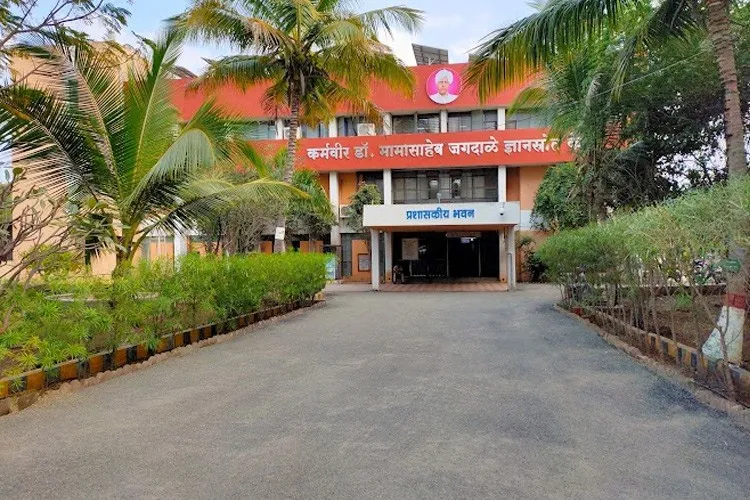

1. Basic Information
| Particular | Details |
|---|---|
| University Name | Punyashlok Ahilyadevi Holkar Solapur University |
| Former Name | Solapur University |
| Established | 1 August 2004 |
| Type | State Public University |
| Location | Kegaon, Solapur, Maharashtra |
| Address | Solapur-Pune National Highway, Kegaon, Solapur – 413255 |
| Jurisdiction | Entire Solapur District |
| Recognition | UGC 2(f) and 12(B) |
| NAAC Accreditation | B++ Grade, CGPA 2.96 |
| NAAC Validity | 24 January 2027 |
| Campus Area | Around 35.5 acres old campus; additional 482-acre new campus area and approximately 500 acres allotted by the Maharashtra Government |
| Official Website | sus.ac.in |
The university’s current mandatory disclosure confirms its Kegaon address, UGC 2(f) and 12(B) recognition, and NAAC B++ accreditation with a CGPA of 2.96.
2. Location & Campus
Punyashlok Ahilyadevi Holkar Solapur University is located at Kegaon on the Solapur-Pune National Highway, around 10 km from central Solapur. Its location on the highway gives students relatively convenient connectivity to Solapur city and surrounding areas.
The university originally developed on a campus of about 35.5 acres. A much larger area has subsequently been allotted by the Maharashtra Government for expansion, including a new administrative and examination building. The university’s infrastructure disclosure records a 482-acre new campus area along with the existing 35.5-acre campus.
The university falls under the jurisdiction of the entire Solapur district. The university’s jurisdiction page currently mentions 104 colleges and around 71,000 enrolled students, although its affiliation section maintains updated college lists separately.
3. Admission Information
Admissions at Punyashlok Ahilyadevi Holkar Solapur University vary according to the programme. The university offers both undergraduate and postgraduate programmes through its university schools, while affiliated colleges conduct admissions for their respective programmes.
For 2026–27, the university has published admission information for postgraduate programmes and has also issued notifications for direct UG admissions and PG direct/entrance-based admissions. The university website also carries a dedicated 2026–27 admission portal and prospectus.
Students should generally follow these steps:
- Check the eligibility requirements for the selected course.
- Register through the university’s admission portal where applicable.
- Appear for an entrance examination if the programme requires one.
- Complete merit-list, counselling or selection procedures as applicable.
- Submit the required academic and category documents.
- Pay the prescribed admission fees within the specified deadline.
Admission rules can differ significantly between university-campus programmes and programmes offered through affiliated colleges. Students should therefore check the current university notification before applying.
4. Undergraduate Programmes
The university has expanded its undergraduate offerings, particularly through skill-oriented and NEP 2020-aligned programmes.
Some undergraduate and integrated programmes associated with the university schools include:
- B.Sc.
- B.Sc. Environmental Science
- B.Sc. Geology
- B.Sc. Physics
- B.Sc. Chemistry
- B.Sc. Computer Science
- B.Sc. Mathematics
- B.Sc. Statistics
- B.Sc. Biotechnology
- B.Sc. Microbiology
- B.Sc. Electronics
- B.Sc. Geography
- BCA
- BBA
- B.Voc. Journalism & Mass Communication
- B.V.A. Bridge Course in Painting
- B.Sc. Pharmaceutical and Fine Chemical Technology
- B.Sc. Paint Technology
- B.Sc. Textile Design Technology
- B.Sc. Cosmetology and Wellness
- B.Sc. Environmental Science
- Five-year integrated M.Tech. Cosmetic Technology
The university’s 2026–27 academic updates show continued expansion of undergraduate programmes under the National Education Policy 2020, including Data Science, Cyber Security-related programmes, Pharmaceutical Manufacturing and Quality, Paint Technology and Textile Design Technology.
Students can also find a much broader range of UG courses through colleges affiliated with the university, including Arts, Commerce, Science, Education, Engineering, Pharmacy, Law and other professional programmes.
5. Postgraduate Programmes
Postgraduate education is one of the major strengths of PAH Solapur University. The university offers programmes across science, technology, humanities, commerce, management, languages and interdisciplinary areas.
Science & Technology
- M.Sc. Chemistry
- Organic Chemistry
- Polymer Chemistry
- Industrial Chemistry
- Medicinal Chemistry
- M.Sc. Physics
- Applied Electronics
- Material Science
- Condensed Matter Physics
- Energy Studies
- M.Sc. Electronic Science
- M.Sc. Electronics
- M.Sc. Electronics – Internet of Things
- M.Sc. Mathematics
- M.Sc. Statistics
- M.Sc. Computer Science
- M.Sc. Bio-Statistics
- M.Sc. Biotechnology
- M.Sc. Microbiology
- M.Sc. Applied Geology
- M.Sc. Geoinformatics
- M.Sc. Environmental Science
- M.Sc. Botany
- M.Sc. Agrochemical and Pest Management
- M.Sc. AI & Machine Learning
- MCA
- Master of Public Health
The university’s 2026–27 syllabus information confirms several of these programmes, including M.Sc. AI and ML, Computer Science, Biotechnology, Microbiology, Environmental Science, Applied Geology, Electronics, Statistics and MCA.
Humanities & Social Sciences
- M.A. Marathi
- M.A. English
- M.A. Hindi
- M.A. Kannada
- M.A. Sanskrit
- M.A. Pali
- M.A. Prakrit
- M.A. Urdu
- M.A. History
- M.A. Economics
- M.A. Political Science
- M.A. Psychology / Applied Psychology
- M.A. Public Administration
- M.A. Rural Development
- M.A. Mass Communication
- M.A. AIHC & Archaeology
Commerce & Management
- M.Com.
- MBA
- BBA
Performing Arts & Fine Arts
- M.A. Music – Vocal/Instrumental
- M.A. Music – Tabla/Pakhawaj
- M.A. Music and Dramatics
- M.V.A. Painting
The university’s published programme list covers these schools and programmes, including Commerce & Management, Languages, Performing Arts, Social Sciences and Allied Health Sciences.
6. Ph.D. / Research Programmes
Research is an important part of PAH Solapur University’s academic structure. Ph.D. opportunities are available in several disciplines associated with the university schools and research sections.
Research areas include:
- Chemistry
- Physics
- Mathematics
- Computer Science
- Statistics
- Applied Geology
- Geoinformatics
- Environmental Sciences
- Languages
- Humanities
- Social Sciences
- Commerce and Management
- Life Sciences and related areas
The university’s programme information specifically lists Ph.D. programmes in areas such as Chemistry, Mathematics, Computer Science, Statistics, Physics, Applied Geology, Geoinformatics and Environmental Sciences.
The university also supports research through its Scientific Instrumentation Centre, Innovation/Incubation and Linkages activities, Avishkar research initiatives and dedicated Ph.D. research processes.
7. University Departments & Academic Areas
PAH Solapur University currently operates through a broad network of university schools:
- School of Physical Sciences
- School of Chemical Sciences
- School of Earth Sciences
- School of Computational Sciences
- School of Social Sciences
- School of Allied Health Science
- School of Commerce and Management
- School of Languages and Literatures
- School of Performing Arts and Fine Arts
- School of Technology
- School of Life Sciences
The university’s official website lists all 11 schools, reflecting its transition from its original focus on postgraduate science education towards a wider multidisciplinary academic structure.
The School of Languages and Literatures, for example, includes departments of Marathi, Hindi, English, Sanskrit, Urdu, Pali, Prakrit and Kannada.
8. Campus & Facilities
The university provides facilities designed to support academic, residential and extracurricular activities.
Major facilities include:
- Boys’ and girls’ hostels
- Hostel facilities for tribal girls
- Central and departmental library facilities
- Computer and digital learning facilities
- Laboratories
- Seminar and conference facilities
- Health Centre
- Day Care Centre
- Gymnasium
- Indoor and outdoor sports facilities
- NSS and student development activities
- Canteen
- Guest House
- Banking/ATM-related services
- Solar power facilities
- Rainwater harvesting
- Water treatment facilities
- CCTV and campus security
- Internet connectivity
The university’s infrastructure disclosure records 19 sports grounds, girls’ hostel accommodation, boys’ hostel facilities, a health centre, departmental libraries, computer facilities and 1 Gbps internet bandwidth.
The university also operates a Skill Development Centre, which provides skill-oriented training alongside traditional academic programmes and focuses on employability, practical learning and entrepreneurship.
9. Affiliated Colleges / Student Life / Career Opportunities
Affiliated Colleges
Punyashlok Ahilyadevi Holkar Solapur University has an extensive affiliated-college network covering Solapur district. The university’s affiliation section publishes separate 2026 lists of affiliated, aided and unaided colleges, making it preferable to older figures when building the Admission Katta database.
The affiliated-college ecosystem covers disciplines such as:
- Arts
- Commerce
- Science
- Education
- Engineering
- Pharmacy
- Law
- Management
- Computer Applications
- Physical Education
- Fine Arts and other professional areas
For Admission Katta, individual colleges should ideally be listed separately rather than treating every affiliated college as part of the university’s own campus.
Student Life
Student life at PAH Solapur University extends beyond classroom teaching. The university conducts cultural programmes, youth festivals, NSS activities, sports competitions, research events and seminars. It also provides opportunities for students to participate in Avishkar, a research and innovation platform operating at university and higher levels.
Career & Placement Opportunities
The university has a Training and Placement Cell, and its 2026–27 prospectus records that the cell was established in 2024. The prospectus lists interactions/placement associations involving organisations such as ICICI Bank, HDFC Bank, Kotak Mahindra Bank, Niva Bupa, Axis Bank, Solapur Janta Sahakari Bank and Tata Consultancy Services.
The university’s Skill Development Centre and incubation initiatives also add an employability and entrepreneurship dimension to the academic experience.
Maps
Photos