
1. Basic Information
| Information | Details |
|---|---|
| University Name | Dr. Vishwanath Karad MIT World Peace University (MIT-WPU) |
| Location | Kothrud, Pune, Maharashtra |
| University Type | State Private University |
| Established | 5 June 2017 |
| Established Under | Dr. Vishwanath Karad MIT World Peace University Act, 2016 – Maharashtra Act No. XXXV of 2017 |
| Promoted By | Maharashtra Academy of Engineering & Educational Research (MAEER) |
| Recognition | UGC recognized |
| Major Approvals / Recognition | UGC, Bar Council of India, Pharmacy Council of India, DSIR |
| Academic Structure | 14 Schools, 31 Departments |
| Programmes | 150+ programmes |
| Students | 25,000+ students on campus |
| Alumni Network | 100,000+ global alumni |
| Campus | Approximately 65 acres, Kothrud, Pune |
| Current Admission Cycle | 2026–27 |
| NIRF 2025 | University: 151–200 band; Engineering: 101–150 band; Pharmacy: Rank 70 |
| Official Website | MIT-WPU |
Dr. Vishwanath Karad MIT World Peace University, commonly known as MIT-WPU, is a State Private University in Pune established under the Maharashtra Act No. XXXV of 2017. The UGC report submitted by the university records 5 June 2017 as its date of establishment.
MIT-WPU has its roots in the MIT educational movement founded by Dr. Vishwanath D. Karad in the early 1980s. The university has developed into a multidisciplinary institution offering programmes across engineering, computer science, management, design, law, science, health sciences, liberal arts and other fields. Its current website lists 14 schools, 31 departments and more than 150 programmes.
2. Location & Campus
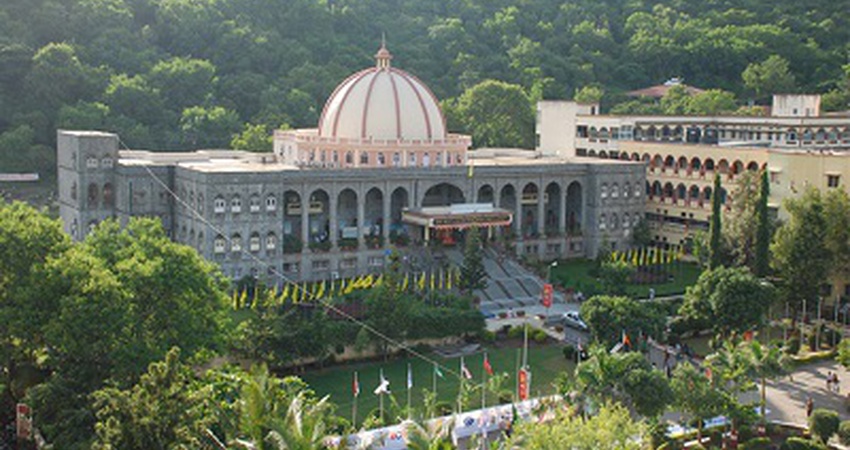
MIT-WPU is located in Kothrud, Pune, one of the established educational and residential areas of the city. The university campus is spread across approximately 65 acres and combines academic buildings, laboratories, libraries, student facilities, sports infrastructure and residential facilities.
The university’s campus infrastructure includes 350+ hi-tech classrooms, 134 state-of-the-art laboratories and multiple auditoriums. The laboratories support engineering, computer science, science and interdisciplinary research activities.
MIT-WPU positions itself around a multidisciplinary educational philosophy that combines professional education with peace studies, social responsibility, leadership and experiential learning.
3. Admission Information
MIT-WPU is currently conducting admissions for the 2026–27 academic year across undergraduate, postgraduate, diploma and Ph.D. programmes. The university conducts its own MIT-WPU CET for several programmes, while programme-specific national and state-level entrance examinations may also be accepted depending on the course.
The general admission process includes:
- Online registration
- Selection of programme
- Submission of academic and personal details
- Application fee payment
- Entrance examination wherever applicable
- Personal Interaction (PI) wherever applicable
- Merit/selection process
- Document verification
- Fee payment
- Final admission confirmation
MIT-WPU CET 2026 consists of an online computer-based test and/or Personal Interaction depending on the programme. The university states that the test structure can include 100 marks for CBT and 50 marks for Personal Interaction.
Different programmes have different admission requirements. For example, the current BCA admission process uses MIT-WPU CET 2026 and Personal Interaction, while candidates holding valid MHT-CET/PERA or other accepted scores may follow a different selection route for some programmes.
Students should therefore check the programme-specific eligibility, entrance examination and selection criteria before applying.
4. Undergraduate Programmes
MIT-WPU offers a particularly broad undergraduate portfolio.
Engineering & Technology
Current B.Tech programmes include:
- B.Tech Chemical Engineering
- B.Tech Civil Engineering
- B.Tech Civil Engineering – Smart Infrastructure & Construction
- B.Tech Computer Science & Engineering
- B.Tech CSE – Artificial Intelligence & Data Science
- B.Tech CSE – Cloud Computing
- B.Tech CSE – Cyber Security & Forensics
- B.Tech Electrical & Computer Engineering
- B.Tech Electronics & Communication Engineering
- B.Tech Electronics & Communication Engineering – AI & ML
- B.Tech Materials Science & Engineering
- B.Tech Renewable Energy
- B.Tech Mechanical Engineering
- B.Tech Mechanical Engineering – Robotics & Automation
- B.Tech Petroleum Engineering
- B.Tech Electronics – Semiconductor & VLSI Design
- B.Tech Bioengineering
The current programme catalogue also includes lateral-entry engineering options.
Computer Science
- BCA
- Computer Science and Applications programmes
- Data and analytics-oriented programmes
Business & Commerce
- BBA Sales & Marketing (Hons.)
- Integrated Business Management (BBA + MBA)
- B.Com (Hons.)
- B.Com Advanced Accounting & Auditing
- B.Com Financial Analysis
- B.Com FinTech
- B.Com International Accounting & Finance
Economics & Science
- B.Sc Economics (Hons.)
- B.Sc Applied Statistics & Data Analytics (Hons.)
- B.Sc Chemistry (Hons.)
- B.Sc Physics (Hons.)
- Integrated M.Sc Biotechnology
Law
- BA LL.B. (Hons.)
- BBA LL.B. (Hons.)
- LL.B.
Design & Creative Arts
- B.Des Product Design
- B.Des User Experience Design
- B.Des Visual Communication Design
- B.Des Fashion & Apparel Design
- B.Des Animation & VFX Design
- B.Des Interior & Space Design
- BFA Applied Arts (Hons.)
Architecture
- Bachelor of Architecture (B.Arch.)
Media & Liberal Arts
- BA Liberal Arts / B.Sc. Honours / Honours with Research
- BA Filmmaking (Hons.)
- BA Media & Communication (Hons.)
- BA Photography (Hons.)
Education
- B.Ed.
The current MIT-WPU undergraduate catalogue lists these programmes with programme-specific durations, generally ranging from two to five years depending on the course.
5. Postgraduate Programmes
MIT-WPU’s postgraduate portfolio covers technology, management, science, commerce, law, design, humanities, media and specialised professional fields.
Engineering & Technology
Examples include:
- M.Tech Chemical Engineering
- M.Tech Civil Engineering – Construction Engineering & Management
- M.Tech Civil Engineering – Structural Engineering
- M.Tech Civil Engineering – Tunnel Engineering
- M.Tech CSE – Artificial Intelligence & Optimization Methods
- M.Tech CSE – Cyber Security
- M.Tech CSE – Data Science & Analytics
- M.Tech Mechanical Engineering
- M.Tech Electronics & Communication Engineering
- M.Tech VLSI and related technology areas
Management & Business
- MBA
- MBA specialisations
- Integrated BBA + MBA
- Postgraduate management programmes
- Post Graduate Diploma in Management
Computer Applications
- MCA
Science
Postgraduate programmes cover areas such as:
- Physics
- Chemistry
- Mathematics
- Statistics
- Biotechnology
- Environmental Science
- Biosciences
- Data Science and related areas
Commerce & Economics
- M.Com
- M.Sc Economics
- Finance and related programmes
Law
- LL.M.
Design & Creative Fields
- M.Des
- MFA Applied Arts
Liberal Arts & Media
- MA English
- MA Psychology
- MA Media & Communication
- MA Photography
- MA Peace & Conflict Management
Education
- M.Ed.
The current university programme catalogue lists postgraduate programmes across these academic areas.
6. Ph.D. / Research Programmes
MIT-WPU has an active doctoral and research ecosystem covering engineering, science, management, humanities, education, peace studies and interdisciplinary areas.
Current university information lists Ph.D. opportunities in areas including:
- Engineering
- Computer Science
- Bioengineering
- Biotechnology
- Chemistry
- Physics
- Mathematics
- Management
- Education
- English
- Psychology
- Sociology
- Peace Studies
- Consciousness Studies
- Other interdisciplinary research areas
The university’s current research information reports 6,000+ research publications, 100+ books, 540+ patents, 850+ Ph.D. scholars and 400+ Ph.D. guides.
MIT-WPU also places emphasis on interdisciplinary research, innovation and industry collaboration. Its research ecosystem covers areas ranging from engineering and emerging technologies to social sciences, peace studies and consciousness-related research.
The Department of Peace Studies, for example, offers an MA in Peace and Conflict Management and a Ph.D. in Peace Studies.
7. University Departments & Academic Areas
MIT-WPU operates through a broad school-and-department structure rather than a conventional affiliated-college model.
The university currently lists 14 schools and 31 departments.
Major academic schools include:
WPU School of Engineering & Technology
- Civil Engineering
- Mechanical Engineering
- Chemical Engineering
- Materials Science & Engineering
- Electrical & Electronics Engineering
- Petroleum Engineering
- Bioengineering
- Polytechnic
WPU School of Computer Science & Engineering
- Computer Engineering & Technology
- Computer Science & Applications
Hafeez Contractor School of Architecture
Prof. Makarand Hastak School of Construction Engineering & Management
Ram Charan School of Leadership
WPU School of Business
- Business
- Hospitality Management
WPU School of Economics & Commerce
- Commerce & Accounting
- Economics
- Public Policy and related areas
MIT School of Government
WPU School of Health Sciences & Technology
- Pharmaceutical Sciences
- Public Health
- Wellness & Yogic Science
- Clinical Sciences
WPU School of Science & Environmental Studies
- Mathematics & Statistics
- Biosciences & Technology
- Physics
- Environmental Studies
- Chemistry
WPU School of Design
- Design
- Visual Arts
WPU School of Liberal Arts
- Liberal Arts
- Education
- Photography
- Dadasaheb Phalke International Film Institute
- Peace Studies
- Media & Communication
WPU School of Law
WPU School of Consciousness
This broad structure is one of the important characteristics of MIT-WPU as a multidisciplinary university.
8. Campus & Facilities
Academic Infrastructure
MIT-WPU has 350+ hi-tech classrooms equipped with smartboards and LCD projectors. The university also reports 134 state-of-the-art laboratories supporting engineering, computer science, science and research activities.
Libraries
The university provides library and learning-resource facilities supporting undergraduate, postgraduate and research students.
Laboratories & Research Facilities
Specialised laboratories support areas such as:
- Engineering
- Computer Science
- Artificial Intelligence
- Cybersecurity
- Electronics
- Materials Science
- Biotechnology
- Chemistry
- Physics
- Environmental Science
- Petroleum Engineering
The university also highlights specialised infrastructure such as a subsea laboratory used for civil and petroleum engineering-related learning and training.
Hostel
MIT-WPU provides hostel accommodation for both boys and girls. The current hostel information states a capacity of approximately 3,000 beds, with single, double and triple occupancy options. Facilities include Wi-Fi, gym, recreation areas, study rooms, dining facilities, laundry, security and shuttle services.
Sports & Student Activities
The campus supports sports, student clubs and extracurricular activities. MIT-WPU currently reports 100+ student clubs, providing opportunities for cultural, technical, entrepreneurial and social activities.
International Exposure
MIT-WPU offers international immersion, student exchange and academic collaboration opportunities. Current university information lists collaborations and immersion programmes involving institutions in countries including the USA, UK, Australia, Singapore, Europe and other regions.
9. Affiliated Colleges / Student Life / Career Opportunities
Affiliated Colleges
MIT-WPU is a State Private University with its own schools and departments, rather than a conventional affiliating university with a large network of independent affiliated colleges.
For Admission Katta, it should therefore be structured as:
MIT-WPU → School → Department → Programme → Specialisation → Eligibility → Entrance → Fees → Admission → Facilities → Placement
This is much more useful for students than an affiliated-college count.
Student Life
MIT-WPU offers a residential university experience with academic facilities, hostels, sports, student clubs, cultural activities, innovation initiatives and international exposure.
Its Degree++ approach also adds experiential learning components such as social leadership development, co-creation, research/innovation/design/entrepreneurship, rural immersion, national immersion and leadership/governance activities.
Career & Placement
MIT-WPU has a dedicated placement and industry-connect ecosystem.
The university’s current 2026 placement highlights report:
- 750+ companies visited
- 2,514 students placed
- 2,750 offers made
- ₹46 lakh highest CTC
- ₹6.30 lakh average CTC
- 200+ offers above ₹10 lakh
These figures are explicitly presented by MIT-WPU as 2026 placement highlights and are marked ongoing, so they should be treated as university-reported current placement data rather than final historical placement statistics.
The university lists recruiters and industry connections including companies such as NVIDIA, Larsen & Toubro, IBM, Cognizant, TCS, Tech Mahindra, HUL, JPMorgan, EY, Deloitte, Wipro, ITC, Amazon, Capgemini, Morgan Stanley and ICICI Bank.
Rankings & Recognition
MIT-WPU’s current ranking page reports:
- NIRF 2025 University: 151–200 band
- NIRF 2025 Engineering: 101–150 band
- NIRF 2025 Pharmacy: Rank 70
- NIRF 2024 Pharmacy: Rank 72
The university also lists recognition from UGC, Bar Council of India, Pharmacy Council of India and DSIR.
Maps
Photos