
1. Basic Information
| Information | Details |
|---|---|
| University Name | FLAME University |
| Location | Gat No. 1270, Lavale, Off Pune–Bengaluru Highway, Pune, Maharashtra – 412115 |
| University Type | State Private University |
| Established | 2015 |
| Established Under | FLAME University Act, 2014 – Maharashtra Act No. II of 2015 |
| Recognition | UGC recognized under Section 2(f); degrees recognized under Section 22 of the UGC Act |
| Institution Type | Jain Minority Institution |
| Accreditation | NAAC A++ |
| Academic Model | Liberal education and multidisciplinary university |
| Academic Schools | 5 |
| Major Areas | Liberal Education, Business, Communication, Computing & Data Sciences, Design, Art & Performance |
| Current Admission Cycle | 2026–27; 2027–28 pre-registration has also opened |
| Campus | Lavale, Pune |
| Sponsoring Body | Foundation for Liberal And Management Education Society |
| Official Website | FLAME University |
FLAME University is a State Private University in Pune, established under the FLAME University Act, 2014. The university is recognized by the UGC under Section 2(f), and its degrees are recognized under Section 22 of the UGC Act. FLAME also identifies itself as a Jain minority institution and currently reports NAAC A++ accreditation.
FLAME is particularly known for its liberal education model, where students can combine disciplines, majors, minors and experiential learning rather than following a narrowly specialised undergraduate curriculum from the first year.
2. Location & Campus
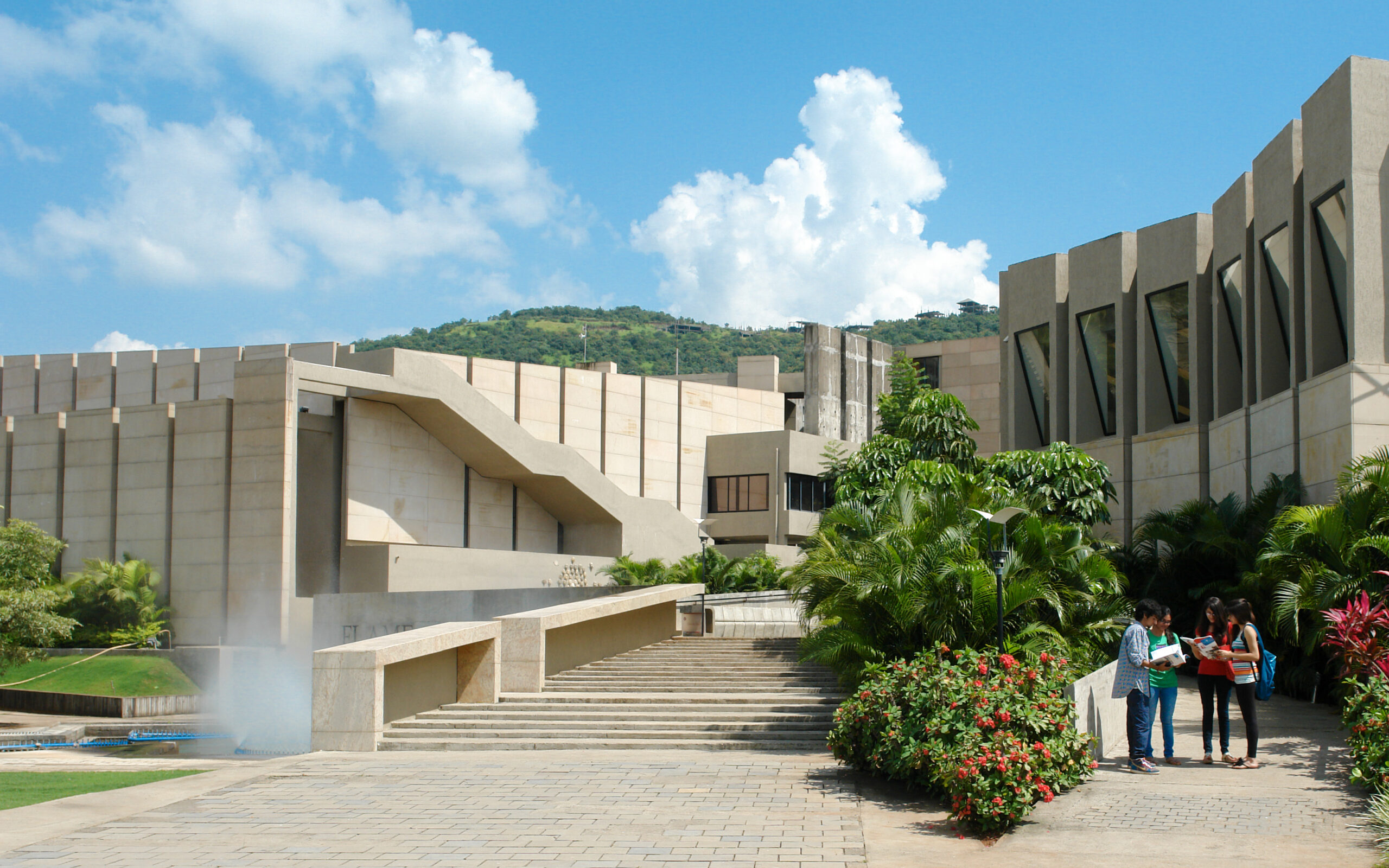
FLAME University is located at Lavale, off the Pune–Bengaluru Highway, in a relatively green campus setting outside central Pune. The university describes its campus as being in a valley environment and designed to combine academic spaces with residential, cultural and sporting facilities.
Current university material describes the campus as approximately 70 acres, around 13 km from the Pune University main gate, and adjoining an 18-hole golf course.
The campus includes classrooms, laboratories, libraries, art and performance spaces, conference facilities, student residences, dining areas, sports infrastructure and recreational spaces.
FLAME’s campus experience is an important part of its educational model because most programmes are designed around a residential and interdisciplinary learning environment.
3. Admission Information
FLAME University is currently accepting applications for the 2026 incoming class. The university uses an online application process and evaluates applicants through a combination of academic performance, entrance-test performance, personal interaction, extracurricular achievements and the Statement of Purpose.
Undergraduate Admission
For the main undergraduate programme, the selection process considers:
- Academic record
- Extracurricular achievements
- Statement of Purpose
- FLAME Entrance Aptitude Test (FEAT)
- Personal Interview
The university follows a holistic selection approach, meaning admission is not based solely on an entrance-test score.
For the B.Des programme, candidates can be assessed through the FLAME Design Aptitude Test (FDAT), or submit scores from accepted examinations such as UCEED, NIFT or NID, followed by a Personal Interview and consideration of the overall application.
Postgraduate Admission
For postgraduate programmes, the selection process can consider:
- Academic record
- Statement of Purpose
- Essay
- Personal Interview
- Extracurricular/professional achievements
- Personality profiling
- Relevant work experience
- National-level entrance scores such as CAT, XAT, MAT, CMAT, GMAT, NMAT or MH-CET, depending on the programme
- FLAME’s own FEAT where applicable
For 2027–28, FLAME has already opened pre-registration and states that the admission process is expected to begin in September/October 2026.
4. Undergraduate Programmes
FLAME’s undergraduate education is built around its liberal education philosophy. Students can pursue a four-year degree with an honours structure and have a three-year exit option for B.A., B.Sc., BBA and BBA (Communications Management). B.Des is a four-year programme.
B.A. Programmes / Majors
Current undergraduate areas include:
- Economics
- Psychology
- Literary & Cultural Studies
- International Studies
- Environmental Studies
- Journalism
- Public Policy
- Sociology
The programme can lead to B.A. or B.A. (Hons.), depending on the student’s academic pathway and duration.
B.Sc. Programmes / Majors
- Applied Mathematics
- Computer Science
- Data Science and Economics
- Computer Science and Design
- B.Sc. (Hons.) Computer Science
BBA Programmes / Majors
- Finance
- Business Analytics
- Marketing
- Human Resource Management
- Entrepreneurship
- Operations
- General Management
- Design Management
Students can pursue BBA or BBA (Hons.), depending on the programme pathway.
BBA (Communications Management)
The programme combines business and management education with communication-oriented areas such as:
- Digital Marketing
- Advertising & Branding
- Media
- Journalism
- Film & Television Management
Bachelor of Design
- B.Des – Experience Design
The Department of Design, Art & Performance also offers Dance, Music, Theatre, Performance Studies and Design as minors within the undergraduate liberal education framework.
Major-Minor Flexibility
One of FLAME’s key differentiators is its major-minor model. Current undergraduate information states that students can choose from 20 majors and 22 minors, creating approximately 240 possible major-minor combinations.
This allows a student to create combinations such as economics with psychology, computer science with design, or business with public policy, depending on available academic pathways.
5. Postgraduate Programmes
FLAME currently offers two-year postgraduate programmes as well as specialised one-year programmes.
Management
- MBA
- MBA (Communications Management)
The MBA is a two-year full-time programme. The university states that its MBA is accepted into the CFA University Affiliation Program.
Economics
- M.Sc. Economics
The programme combines economics with modern quantitative and data-science methodologies.
Entrepreneurship
- Postgraduate Program in Entrepreneurship and Innovation (PGPEI)
This is a one-year full-time programme designed around entrepreneurship, opportunity identification, product development, customer acquisition and fundraising.
FLAME Scholars Program
- FLAME Scholars Program
This is a one-year interdisciplinary programme focused on research and scholarship following undergraduate study. FLAME currently classifies it under its postgraduate offerings.
6. Ph.D. / Research Programmes
FLAME University has doctoral programmes through three broad academic areas:
- Faculty of Liberal Education
- Faculty of Business
- Faculty of Computing and Data Sciences
Current university material identifies doctoral research areas including:
- Management
- Economics
- Psychology
- Data Science
- Environmental Studies
- Humanities
- Sociology
FLAME’s research environment is strongly interdisciplinary, with research and centres covering economics, public policy, sustainability, mathematical modelling, entrepreneurship, legislative studies, South and Southeast Asian studies and other areas.
The university also maintains a range of Centres of Excellence, supporting research and academic activity beyond traditional departmental boundaries.
7. University Departments & Academic Areas
FLAME University currently operates through five academic schools.
1. FLAME School of Liberal Education
Departments include:
- Physical & Natural Sciences
- Humanities & Languages
- Social Sciences
- Economics
- Psychological Sciences
Academic areas include history, philosophy, political science, sociology, public policy, environmental studies, international studies, economics and psychology.
2. FLAME School of Business
Departments:
- Finance
- Marketing
- Human Resource Management
- Operations & Analytics
The school covers areas such as finance, accounting, marketing, organisational behaviour, business analytics, operations and strategy.
3. FLAME School of Communication
The school focuses on communication and media education.
Major areas include:
- Digital Marketing
- Advertising & Branding
- Journalism
- Film & Television Management
- Communication Management
The Department of Media & Journalism is the principal academic department under this school.
4. FLAME School of Computing & Data Sciences
The school focuses on:
- Computer Science
- Data Science
- Computer Science & Design
- Data Science & Economics
- Interdisciplinary computing research
The school also houses the doctoral programme in Data Science.
5. FLAME School of Design, Art & Performance
The school covers:
- Design
- Music
- Theatre
- Dance
- Performance Studies
- Visual Art
- Sculpture
Its B.Des programme currently focuses on Experience Design, while arts and performance disciplines can also be pursued through the undergraduate major-minor framework.
8. Campus & Facilities
Vivekananda Library
FLAME’s Vivekananda Library provides academic resources for students across disciplines. Current university material reports 55,000+ books and digital resources, along with reading and learning spaces.
Academic Infrastructure
The campus includes:
- Smart classrooms
- Advanced laboratories
- Bloomberg Lab
- Lecture theatres
- Collaborative learning spaces
- Conference venues
- Art centres
- Performance spaces
- Computer facilities
Sports Facilities
Sports form an important component of campus life. FLAME states that sports are mandatory for students and provides indoor and outdoor sporting facilities.
Facilities include:
- Cricket ground
- Football ground
- Swimming pool
- Badminton
- Squash
- Gymnasium
- Other indoor and outdoor sports
The university currently mentions competitive sports across 14 disciplines.
Hostel & Residential Life
FLAME follows a residential campus model with student accommodation, dining and recreational facilities.
The campus infrastructure also includes cafes, Wi-Fi connectivity, an infirmary and emergency ambulance facilities.
Writing & Quantitative Support
The university has dedicated academic support facilities including a Writing Centre and Q Centre, designed to help students develop writing, quantitative reasoning and academic skills.
International Exposure
International collaboration is an important part of FLAME’s academic philosophy, with the university emphasising international academic exposure, collaborations and global perspectives.
9. Affiliated Colleges / Student Life / Career Opportunities
Affiliated Colleges
FLAME University is a State Private University with its own academic schools and departments. It should not be presented as a conventional affiliating university with a network of independent affiliated colleges.
For Admission Katta, the appropriate structure is:
FLAME University → School → Department → Programme → Major/Minor → Eligibility → Entrance → Fees → Admission → Facilities → Placement
This is especially important because FLAME’s liberal education model makes the major-minor combination a significant part of the student’s academic journey.
Student Life
FLAME offers a residential student experience built around academics, sports, arts, clubs, cultural activities and interdisciplinary learning.
Students can participate in sports, performing arts, creative activities, student organisations, academic initiatives and experiential-learning opportunities.
The campus environment is designed to encourage interaction between students from different academic disciplines rather than keeping programmes completely isolated.
Career & Placement
FLAME has a dedicated Career Services function supporting internships, placements, career preparation and industry engagement.
For the 2025–26 graduating class, the university’s interim placement report currently states:
MBA
- Highest package: ₹19 lakh per annum
- Average package: ₹10.3 lakh per annum
- 46% of MBA students placed at the time of the interim report
MBA (Communications Management)
- Highest package: ₹10.7 lakh per annum
- Average package: ₹9.8 lakh per annum
- 56% of students placed at the time of the interim report
These are interim 2025–26 figures, not final placement results.
For Admission Katta, placement figures should therefore be displayed with the year and programme clearly mentioned, rather than showing a single university-wide package.
Maps
Photos