Deccan College Postgraduate & Research Institute is one of Maharashtra’s most distinctive higher-education institutions, particularly known for archaeology, ancient Indian history, linguistics, Sanskrit and lexicography, anthropology and heritage-related research. Unlike a conventional university offering a large range of undergraduate programmes, Deccan College has a specialised postgraduate and research-oriented academic profile.
1. Basic Information
| Particular | Details |
|---|---|
| University / Institute Name | Deccan College Postgraduate & Research Institute |
| Common Name | Deccan College |
| Location | Yerawada, Pune, Maharashtra |
| Established | 6 October 1821 |
| Current Academic Identity | Postgraduate & Research Institute / Deemed to be University |
| Status | Deemed to be University |
| Recognition | Recognised under the UGC framework |
| Academic Focus | Archaeology, Ancient Indian History, Culture & Archaeology, Linguistics, Sanskrit & Lexicography, Anthropology, Sociology and related heritage studies |
| Major Study Level | Postgraduate, Diploma, PG Diploma and Ph.D. / Research |
| Campus | Yerawada, Pune |
| Address | Deccan College Road, Yerawada, Pune, Maharashtra – 411006 |
| Official Website | deccancollegepune.ac.in |
The UGC’s published list identifies Deccan College Post-Graduate & Research Institute, Pune as a Deemed University, with its recognition dating to 5 March 1990.
2. Location & Campus
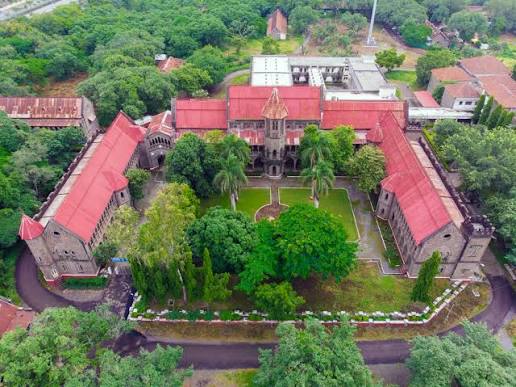
Deccan College is located in Yerawada, Pune, on Deccan College Road. Its present campus has a long historical association with the institution. The college moved to its present area in the 19th century, and the foundation stone of the historic main building was laid in 1864.
The institution traces its origins to Hindoo College, established on 6 October 1821 by the Bombay Presidency Government using the Dakshina Grant. It is described by its institutional digital library as the third oldest educational institute in India.
Today, the campus functions primarily as a centre for advanced study, postgraduate education, archaeological research, linguistic research and the study of India’s cultural and historical traditions.
3. Admission Information
Admission at Deccan College is different from the process followed by large general universities because its academic portfolio is strongly concentrated around specialised postgraduate and research disciplines.
The major academic programmes include M.A. programmes in Archaeology, Linguistics and Sanskrit & Lexicography, along with doctoral research and specialised diploma/PG diploma programmes. Current course listings also include programmes connected with museology and heritage conservation.
For prospective students, the typical admission process involves:
- Checking the eligibility criteria for the selected programme
- Applying through the institute’s notified admission process
- Appearing for an entrance test wherever prescribed
- Merit/academic evaluation and departmental selection
- Document verification
- Payment of applicable admission fees
For Ph.D. admissions, entrance-test requirements may vary according to the programme and applicable UGC/institutional rules. Candidates holding relevant national-level qualifications such as NET/JRF may receive exemptions where the applicable admission rules provide for them.
Important for Admission Katta: Course availability, eligibility, entrance requirements and fees should be checked against the latest admission notification before publishing a specific admission deadline or fee figure.
4. Undergraduate Programmes
Deccan College is not primarily an undergraduate university. Its academic identity is centred on postgraduate education and advanced research.
Therefore, Admission Katta should not present Deccan College as a conventional college offering a broad portfolio of B.A., B.Com., B.Sc. or engineering undergraduate degrees.
Specialised diploma-level offerings may be available in areas such as archaeology, museology and heritage studies, depending on the academic session.
5. Postgraduate Programmes
The postgraduate programmes are the core of Deccan College’s academic offering.
M.A. Programmes
Major postgraduate areas include:
- M.A. Ancient Indian History, Culture & Archaeology / Archaeology
- M.A. Linguistics
- M.A. Sanskrit & Lexicography
The Archaeology programme is particularly associated with the study of India’s prehistoric, protohistoric and historical past, archaeological methods, material culture and ancient Indian civilisation.
The Linguistics programme focuses on language structure, historical linguistics and the study of Indian and South Asian languages.
Sanskrit & Lexicography provides advanced study of Sanskrit language, texts and lexicographical traditions. Current course listings identify the three major M.A. streams as Archaeology, Linguistics and Sanskrit & Lexicography.
Diploma / PG Diploma Areas
Depending on the academic session, specialised programmes have included:
- Diploma in Archaeology and Museology
- Diploma in Heritage Sites Management and Scientific Conservation
- Post Graduate Diploma in Museology
- Other specialised archaeology and heritage-related programmes
The heritage-sites programme has been associated with practical understanding of heritage management and scientific conservation.
6. Ph.D. / Research Programmes
Research is one of the strongest aspects of Deccan College.
Doctoral research has been conducted across areas including:
- Archaeology
- Ancient Indian History, Culture & Archaeology
- Linguistics
- Sanskrit & Lexicography
- Anthropology
- Sociology
- Medieval and Maratha History
- Related areas of Indian cultural and historical studies
The institute’s research collections cover areas including Ancient Indian History, Culture & Archaeology, Linguistics, Medieval and Maratha History, Sociology, Anthropology and Sanskrit studies.
Deccan College also has a long publication tradition. Its Bulletin of the Deccan College Post-Graduate & Research Institute has been published since 1940 and carries research in areas such as archaeology, history, anthropology, Sanskrit and linguistics.
7. University Departments & Academic Areas
Deccan College’s academic identity is built around specialised humanities and social-science disciplines rather than a large multi-faculty university structure.
Major academic and research areas include:
Archaeology & Ancient Indian History
Research covers prehistoric and protohistoric archaeology, ancient Indian civilisation, material culture, excavation, archaeological interpretation and related historical studies.
Linguistics
The institute has a long-standing reputation for linguistic research, including Indian languages, historical linguistics, language documentation and related areas.
Sanskrit & Lexicography
Sanskrit language, literature, textual studies and lexicographical research form another important academic area.
Anthropology & Sociology
The institute has also contributed to anthropological and sociological research, particularly in relation to Indian society and culture.
Medieval & Maratha History
Research and documentation relating to medieval Indian and Maratha history are another important part of the institute’s wider scholarly work.
The institute’s digital library describes its core collections as covering Archaeology, Ancient Indian History, Medieval History, Anthropology, Linguistics, Sanskrit, Philosophy and Religion, along with supporting fields.
8. Campus & Facilities
Library & Knowledge Resources
The Deccan College library is one of its most important academic resources. Its collections are particularly strong in archaeology, ancient Indian history, anthropology, linguistics, Sanskrit and related Indological subjects.
The digital library also provides access to:
- Books
- Master’s dissertations
- Doctoral theses
- Research publications
- Historical materials
- Deccan College publications
- Archaeology and Indology resources
The institute’s digital repository highlights collections of books dating back several centuries, along with research theses and dissertations from its postgraduate and doctoral scholars.
Research Environment
Students pursuing postgraduate and doctoral study benefit from an academic environment designed around research rather than conventional mass-market college education.
The institute’s research and publication activities have contributed significantly to archaeology, linguistics, Sanskrit studies, anthropology and Indian history.
Publications
The Bulletin of the Deccan College is an important scholarly publication associated with the institute and has a long publication history dating back to 1940.
9. Affiliated Colleges / Student Life / Career Opportunities
Affiliated Colleges
Deccan College should not be treated as a conventional affiliating university with a large network of affiliated colleges.
Its model is primarily centred on its own postgraduate departments, specialised academic programmes and research activities. This is an important distinction for the Admission Katta database.
Student Life
Student life at Deccan College is likely to be quite different from that of a large undergraduate university.
The academic environment is particularly suitable for students interested in:
- Archaeology
- Ancient Indian civilisation
- History
- Languages
- Sanskrit
- Linguistics
- Anthropology
- Museums
- Heritage conservation
- Cultural studies
- Academic research
Career Opportunities
Depending on the programme and individual qualifications, students can explore careers in:
- Archaeological research
- Museums and cultural institutions
- Heritage management
- Conservation
- Archives and documentation
- Linguistic research
- Sanskrit studies
- Teaching and academia
- Research organisations
- Government cultural and archaeological departments
- Heritage tourism and interpretation
- Ph.D. and further academic research
For students interested specifically in archaeology, heritage and Indian civilisation, Deccan College has a much more specialised academic profile than a conventional arts college.
Maps
Photos