
1. Basic Information
| Information | Details |
|---|---|
| University Name | MIT Art, Design and Technology University (MIT-ADT University) |
| Location | Rajbaug, Loni-Kalbhor, Pune, Maharashtra – 412201 |
| University Type | State Private University |
| Established | 21 August 2015 |
| Operational From | Academic Year 2016–17 |
| Established Under | MIT Art, Design and Technology University Act, 2015 – Maharashtra Act No. XXXIX of 2015 |
| UGC Recognition | Recognized under Section 2(f); empowered to award degrees under Section 22 |
| NAAC Accreditation | A Grade, CGPA 3.11 |
| Campus | Rajbaug, Loni-Kalbhor, Pune |
| Campus Area | Approximately 85 acres in the university’s NAAC profile |
| Academic Structure | Multidisciplinary, school-based university |
| Schools / Academic Units | 21 schools across 10 faculties in current university information |
| Major Areas | Engineering, Computing, AI, Design, Architecture, Fine Arts, Management, Food Technology, Bioengineering, Marine Engineering, Film & Television, Law, Education, Humanities and Vedic Sciences |
| Current Admission Cycle | 2026–27 |
| Official Website | MIT-ADT University |
MIT Art, Design and Technology University, commonly known as MIT-ADT University, is a State Private University located at Loni-Kalbhor, Pune. It was established by the Government of Maharashtra under the MIT Art, Design and Technology University Act, 2015 and became operational from the 2016–17 academic year. The UGC recognized the university in November 2016.
The university has a distinctive multidisciplinary identity built around the combination of art, design and technology. Its current academic structure spans engineering, computing, artificial intelligence, design, architecture, management, fine arts, food technology, bioengineering, marine education, film, theatre, law, education, humanities and other areas.
MIT-ADT received an A Grade from NAAC with CGPA 3.11 in its first accreditation cycle.
2. Location & Campus
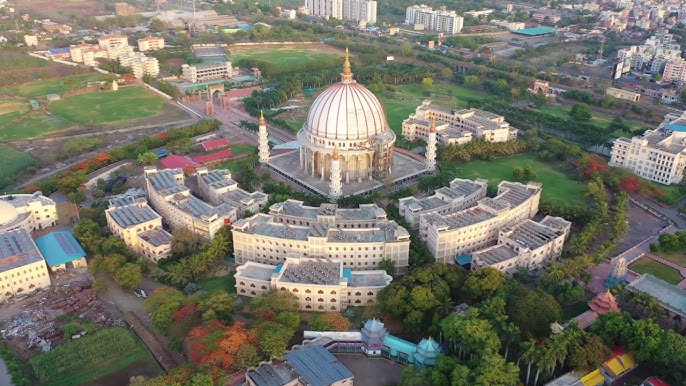
MIT-ADT University is situated at Rajbaug, Loni-Kalbhor, Pune – 412201, on the Pune–Solapur Highway. The university’s main campus is located along the Mula-Mutha river and is designed as a large residential and multidisciplinary campus.
The university’s NAAC profile records the main campus at approximately 85 acres, while the current university website describes the broader Vishwaraj Baug campus as extending across a larger green campus area. For Admission Katta, the 85-acre figure from the university’s NAAC profile is the safer academic-data reference.
The campus combines conventional academic infrastructure with specialised facilities for design, fine arts, engineering, computing, film, theatre, food technology, bioengineering and other disciplines.
MIT-ADT’s academic philosophy also encourages students to move between disciplines through open electives and multidisciplinary learning. Its current NEP initiative includes subjects ranging from AI and cybersecurity to photography, psychology, digital marketing, robotics and user-centred design.
3. Admission Information
MIT-ADT University is conducting admissions for the 2026–27 academic year. The current university admission portal allows applicants to select their school and programme, complete the application and proceed through the programme-specific selection process.
The general application process involves:
- Online registration
- Selection of school and programme
- Entering personal and academic details
- Uploading required documents
- Application fee payment
- Programme-specific entrance/merit process
- Merit list or selection
- Document verification
- Fee payment
- Final admission confirmation
The current 2026–27 admission process lists an application fee of ₹1,800 for the general university application process. Programme-specific admission rules can differ.
Admission requirements may include:
- MHT-CET
- JEE
- PERA
- NATA
- NIFT/NID/UCEED or other design examinations
- Programme-specific university entrance examinations
- Merit-based admission
- Personal interaction/audition/portfolio where applicable
Students should check the specific programme before applying because engineering, architecture, design, fine arts, management, law, film and other programmes do not necessarily follow the same admission route.
The university’s current website also shows 2026–27 admissions open for the School of Allied Healthcare Sciences.
4. Undergraduate Programmes
MIT-ADT offers undergraduate programmes across technology, creative disciplines, management, architecture, sciences, law, education and other fields.
Engineering & Technology
Current engineering and technology offerings include:
- B.Tech Computer Science & Engineering
- B.Tech Information Technology
- B.Tech Artificial Intelligence & Data Science
- B.Tech Artificial Intelligence & Machine Learning
- B.Tech Electronics & Communication Engineering
- B.Tech Electrical Engineering
- B.Tech Mechanical Engineering
- B.Tech Civil Engineering
- B.Tech Chemical Engineering
- B.Tech Robotics & Automation
- B.Tech Aerospace-related programmes
- B.Tech other emerging technology specialisations
The university’s engineering ecosystem combines conventional engineering with newer areas such as AI, robotics, cybersecurity, cloud computing and emerging technologies.
Computing & Artificial Intelligence
- B.Tech Computing programmes
- B.Tech AI – Data Science
- B.Tech AI – Machine Learning
- Other computer science and application-oriented programmes
Design
- Bachelor of Design (B.Des.)
The Institute of Design offers design education across areas such as product, graphic, fashion, interior, immersive media and other design disciplines.
Architecture & Planning
- B.Arch.
- Architecture-related programmes
Management & Computer Applications
- BBA
- B.Com
- BCA
- Other management and computer application programmes
Food Technology
- B.Tech Food Technology
Bioengineering
- B.Tech Bioengineering
Marine Engineering
Through the Maharashtra Academy of Naval Education and Training (MANET), the university offers marine-engineering education and related maritime training.
Fine Arts & Applied Arts
- Bachelor of Fine Arts
- Applied Arts programmes
- Fine Arts specialisations
Film, Television & Media
- Film and Television programmes
- Broadcasting and Journalism
- Media-related programmes
Performing Arts
- Music
- Theatre
- Drama
- Performing arts
Law
- LL.B.
- Other law programmes as currently offered
Education & Allied Areas
- B.Ed.
- Allied healthcare programmes
Current university information lists allied healthcare undergraduate programmes including B.AOTT, B.DTT, B.CVT, B.MLS, B.P.A., B.CCT, B.Sc. NMT and B.MRIT.
5. Postgraduate Programmes
MIT-ADT offers postgraduate programmes across engineering, technology, design, management, sciences, architecture, computing, humanities and other disciplines.
Engineering & Technology
Current areas include:
- M.Tech Computer Science & Information Technology
- M.Tech Engineering specialisations
- M.Tech Food Technology
- M.Tech Food Safety & Quality Management
- M.Tech Environmental Bioengineering
- Integrated M.Tech programmes
The university’s current engineering information includes M.Tech CSE/IT and programme-specific 2026–27 fee information.
Computing & AI
- M.Tech Computer Science & IT
- M.Sc Computing-related programmes
- M.Tech/PG programmes in emerging technology areas
Design
- Master of Design (M.Des.)
- Animation Design
- Design Management
- Fashion Management & Marketing
- Film & Video Design
- Graphic Design
- Immersive Media Design
- Interior, Space & Furniture Design
- Product Design
- Retail & Exhibition Design
The university’s NAAC profile specifically lists these M.Des. specialisations under the Institute of Design.
Management
- MBA
- Management and computer application programmes
- Finance and business-related postgraduate programmes
Architecture & Planning
- M.Arch.
- M.Plan
- Architecture-related postgraduate programmes
Science & Bioengineering
- M.Sc. Industrial Biotechnology
- M.Tech Environmental Bioengineering
- Integrated M.Tech Bioengineering
- M.Sc and other science programmes
Education
- M.A. Education
- M.Sc. e-Learning
- PG Diploma in Guidance & Counselling
- Other education-related programmes
The current School of Education & Research also lists a two-year M.A. in Education, M.Sc. e-Learning and PGDGC.
Psychology & Humanities
- M.Sc. Clinical Psychology
- M.A. programmes in humanities and related areas
- Vedic Sciences-related postgraduate programmes
Law
- LL.M.
Film, Theatre & Performing Arts
- Postgraduate programmes in film, theatre, drama, music and related creative fields.
6. Ph.D. / Research Programmes
MIT-ADT University offers Ph.D. programmes across engineering, technology, design, sciences, management, humanities, education and other disciplines.
Current university information lists doctoral research opportunities in areas including:
- Engineering
- Computer Science
- Information Technology
- Artificial Intelligence
- Design
- Architecture
- Food Technology
- Biotechnology
- Bioengineering
- Biomedical Sciences
- Bioinformatics
- Management
- Education
- Humanities
- Vedic Sciences
- Fine Arts
- Other interdisciplinary fields
For example, the Faculty of Technology currently lists Ph.D. areas in Food Process Technology, Food Process Engineering, Food Safety & Quality, Biotechnology, Bioinformatics and Biomedical Sciences.
The Institute of Design also offers a Ph.D. in Design, while current university programme information lists Ph.D. options in Engineering, Computing, AI and other academic areas.
The university maintains dedicated doctoral and research regulations, including updated Doctoral Research Ordinances 2026 in its mandatory disclosures.
7. University Departments & Academic Areas
MIT-ADT has a large school-based academic structure. Current university information identifies 21 schools across 10 faculties, while older official admission documentation lists 17 constituent schools. The current structure should therefore be used for the Admission Katta database.
Faculty of Art, Fine Art & Performing Arts
- Vishwashanti Sangeet Kala Academy (VSKA)
- School of Fine Arts & Applied Arts (SOFA)
Faculty of Design & Architecture
- Institute of Design (IOD)
- School of Architecture & Planning
Faculty of Computer Science & Information Technology
- School of Computing
- School of Artificial Intelligence
Faculty of Engineering & Sciences
- School of Engineering & Science
Faculty of Humanities & Social Sciences
- School of Education & Research
- School of Vedic Sciences
- School of Humanities
- School of Indian Civil Services
Faculty of Commerce & Management
- MIT College of Management
- School/College of Business & Computer Applications
Faculty of Technology
- Maharashtra Academy of Naval Education & Training (MANET)
- School of Food Technology
- School of Bioengineering Sciences & Research
Faculty of Film & Media Studies
- School of Film & Television
- School of Drama
Faculty of Law
- School of Law
Interdisciplinary & Research
- School of Interdisciplinary and Doctoral Studies
- MIT INSPIRE
- Innovation and entrepreneurship centres
The university’s current admission administration page provides school-wise coordinators for 2026–27, including Design, Architecture, Computing, Engineering & Sciences, Education, Vedic Sciences, Humanities, Food Technology, Bioengineering, Film & Television, Drama, Law, Management and Interdisciplinary/Doctoral Studies.
8. Campus & Facilities
Academic Infrastructure
MIT-ADT’s large campus supports academic infrastructure for engineering, computing, design, architecture, fine arts, film, food technology, bioengineering and other disciplines.
The university describes its facilities as including specialised laboratories, innovation spaces, studios, workshops and technology infrastructure.
Innovation & Entrepreneurship
MIT-ADT has an Atal Incubation Centre supported under NITI Aayog’s Atal Innovation Mission. It also operates CRIEYA – Centre of Research, Innovation & Entrepreneurship for Young Aspirants.
The university’s innovation infrastructure includes:
- Ideation & Innovation Labs
- Makerspaces
- Prototype & Product Labs
- High Computing facilities
- Futuristic technology laboratories
Design & Creative Facilities
The university’s design and creative ecosystem includes:
- Design studios
- Fine arts studios
- Applied arts facilities
- Film facilities
- Theatre spaces
- Music and performing arts facilities
- Photography and media infrastructure
Engineering & Technology Laboratories
Specialised facilities support:
- Artificial Intelligence
- Machine Learning
- Robotics
- Cybersecurity
- Cloud Computing
- Electronics
- Mechanical Engineering
- Food Technology
- Bioengineering
- Marine Engineering
Hostel
MIT-ADT operates a residential campus and currently highlights in-house hostel facilities with student accommodation and security. The university’s current website also provides dedicated hostel information.
Sports & Student Life
The campus provides sports, cultural and extracurricular facilities. The university’s broader educational philosophy includes holistic development alongside academics, with sports, cultural events and student activities forming part of campus life.
Transport
The university currently provides transport facilities across Pune city for students.
9. Affiliated Colleges / Student Life / Career Opportunities
Affiliated Colleges
MIT-ADT University should not be treated as a conventional affiliating university with hundreds of independent affiliated colleges.
It operates through its own schools, constituent academic units, faculties and centres.
For Admission Katta, the recommended structure is:
MIT-ADT University → Faculty → School/Institute → Department → Programme → Specialisation → Eligibility → Entrance → Intake → Fees → Admission → Facilities → Placement
This is especially important because the university has a large and diverse academic portfolio covering both technical and creative education.
Student Life
MIT-ADT offers a residential university environment where students from engineering, computing, design, fine arts, management, film, theatre, food technology, law and other disciplines interact within the same campus.
The university’s multidisciplinary structure also supports open elective courses, allowing students to explore subjects outside their core programme. Current examples include AI, cloud computing, prompt engineering, data visualization, robotics, photography, psychology, digital marketing and user-centred design.
Career & Placement
MIT-ADT has a Central Corporate Relations & Placement Cell responsible for internships, placement drives and industry engagement.
Importantly for Admission Katta, the university publishes institution-wise placement statistics rather than relying only on one consolidated university number. Current placement data is separately organised for institutions including:
- MIT School of Computing
- MIT School of Engineering & Science
- MIT Institute of Design
- MANET
- MIT College of Management
- MIT School of Fine Arts & Applied Arts
- MIT School of Food Technology
- MIT International School of Broadcasting & Journalism
This is a better structure for Admission Katta because placement outcomes can vary significantly by school and programme. We should therefore avoid presenting one generic “MIT-ADT average package” unless it is supported by a current university-wide report.
Maps
Photos