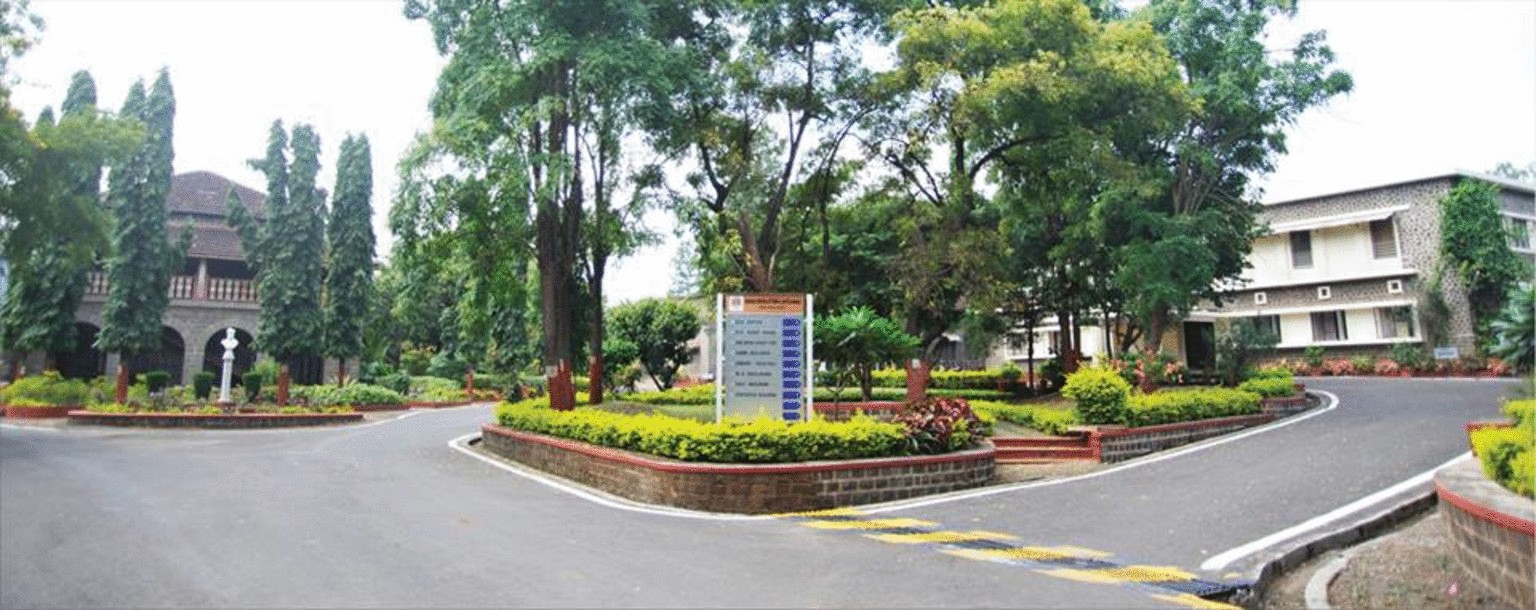

Gokhale Institute of Politics & Economics (GIPE) is one of India’s oldest institutions specialising in economics, social sciences and policy-oriented research. Established in 1930 by the Servants of India Society, the institute has built its academic identity around empirical research into India’s socio-economic issues. GIPE was granted Deemed to be University status in 1993 under Section 3 of the UGC Act, 1956.
1. Basic Information
| Particular | Details |
|---|---|
| Institute Name | Gokhale Institute of Politics & Economics |
| Common Name | GIPE |
| Location | Pune, Maharashtra |
| Established | 1930 |
| Founder / Establishing Body | Servants of India Society |
| Status | Deemed to be University |
| Recognition | Deemed to be University under Section 3 of the UGC Act, 1956 |
| Academic Focus | Economics, Financial Economics, Agricultural Economics, Population Studies, Public Policy, Sociology and related social sciences |
| Major Study Levels | Undergraduate, Postgraduate, PGP and Ph.D. |
| Address | 846, Shivajinagar, Deccan, Pune, Maharashtra – 411004 |
| Official Website | gipe.ac.in |
GIPE describes itself as the oldest research and training institute in Economics in the country, with a long-standing focus on the socio-economic dimensions of Indian society.
2. Location & Campus
Gokhale Institute of Politics & Economics is located in the Deccan/Shivajinagar area of Pune, making it accessible from several major educational and residential parts of the city.
The institute’s current official address is 846, Shivajinagar, Deccan, Pune – 411004.
The campus environment is particularly suited to students interested in economics, data, public policy and social-science research. Rather than functioning like a broad multidisciplinary university, GIPE has developed a specialised academic ecosystem around economics and related disciplines.
Its academic environment combines classroom teaching with research, seminars, policy discussions and quantitative analysis.
3. Admission Information
GIPE’s 2026–27 admissions cover its undergraduate, postgraduate and specialised programmes. For the 2026–27 academic year, admissions to the main UG and PG programmes are based on CUET and/or the GIPE Common Entrance Test (GCET), depending on the programme.
Undergraduate Admission
For B.Sc. Economics, the 2026–27 eligibility requirement is:
- Minimum 60% aggregate marks in Class 12 or equivalent.
- Minimum 50% for SC/ST category candidates.
- Candidates awaiting their Class 12 results may also apply provisionally.
- Admission is through CUET-UG and/or GCET-UG.
Postgraduate Admission
For the main M.Sc. and M.A. Economics programmes:
- Minimum 50% aggregate marks at graduation level.
- Minimum 45% for SC/ST reserved category candidates.
- Admission is through CUET-PG and/or GCET-PG.
PGPFE Admission
The Post Graduate Programme in Financial Economics (PGPFE) follows a separate GIPE selection process involving an interview. The 2026–27 intake listed by GIPE is 40 seats, with eligibility requiring a graduate degree in any discipline or stream that includes Statistics as one of the courses.
Students should always check the latest admission notification before applying because entrance requirements, dates, seats and programme structures can change.
4. Undergraduate Programmes
GIPE has expanded its undergraduate education under the NEP-compliant four-year programme structure. The institute’s current academic information describes its undergraduate programme as a four-year economics degree with multidisciplinary learning.
B.Sc. Economics
The B.Sc. Economics programme provides students with a foundation in:
- Economics
- Mathematics
- Statistics
- Data analysis
- Econometrics
- Social sciences
- Economic policy
- Research methods
For 2026–27, GIPE lists 150 seats for B.Sc. Economics.
B.Sc. Economics (Data Science)
GIPE also lists B.Sc. Economics (Data Science) under its undergraduate offerings, providing an interdisciplinary route combining economics with data-oriented skills.
This programme is particularly relevant for students looking toward careers involving economic data, analytics, financial analysis, policy research and quantitative decision-making.
5. Postgraduate Programmes
Postgraduate education is one of GIPE’s strongest academic areas.
For 2026–27, the institute lists the following major postgraduate programmes:
M.Sc. Economics
Specialised pathways include:
- M.Sc. Economics
- M.Sc. Economics – Financial Economics
- M.Sc. Economics – Agribusiness Economics
- M.Sc. Economics – International Business Economics & Finance
- M.Sc. Economics – Population Studies & Health Economics
- M.Sc. Economics – Geo-politics & Geo-economics
M.Sc. Public Policy
The M.Sc. Public Policy programme is designed for students interested in policy analysis, governance, public institutions and socio-economic development.
M.A. Economics
GIPE also offers an M.A. Economics programme for students seeking advanced study in economic theory, quantitative methods and applied economics.
Post Graduate Programme in Financial Economics
The PGPFE is a specialised programme focused on financial economics and is intended for graduates seeking deeper exposure to finance, economics and quantitative analysis.
GIPE’s 2026–27 admission brochure also notes that its eight PG programmes are transitioning to a NEP-compliant structure, including major-based curricula, open electives and greater interdisciplinary flexibility.
6. Ph.D. / Research Programmes
Research is central to GIPE’s institutional identity.
Under its current Ph.D. rules, the institute offers doctoral programmes in:
- Economics
- Agricultural Economics
- Population Studies
- Law and Economics
- Public Policy
- Sociology
- Sustainable Development
GIPE describes its Ph.D. programme as applied and encourages students to select research topics relevant to contemporary socio-economic problems. Admission involves an All India Entrance Examination comprising a written test and interview, followed by one semester of coursework as pre-Ph.D. preparation.
The institute’s research orientation makes it particularly relevant for students planning careers in:
- Economic research
- Policy research
- Academia
- Government
- International organisations
- Development organisations
- Think tanks
- Corporate research and analytics
7. University Departments & Academic Areas
GIPE’s academic structure is highly specialised rather than being spread across conventional engineering, medical, arts and science faculties.
Its major academic and research areas include:
Economics
The central academic discipline of the institute, covering economic theory, econometrics, applied economics, development economics and policy analysis.
Financial Economics
Focuses on financial markets, financial analysis, economics and quantitative approaches to finance.
Agricultural Economics
Studies agriculture, rural economies, agricultural markets, farm economics and development-related issues.
Population Studies
Focuses on demographic trends, population economics, health, migration and related socio-economic questions.
Public Policy
Covers policy analysis, governance, institutions and economic and social development.
Law & Economics
An interdisciplinary area examining legal institutions and economic outcomes.
Sociology
Provides a social-science perspective on economic and development issues.
Sustainable Development
Connects economics, society, environment and long-term development challenges.
The institute’s Ph.D. regulations currently recognise all seven of these areas as doctoral disciplines.
8. Campus & Facilities
GIPE’s facilities are designed around its teaching, research and academic activities.
Library & Research Resources
For an economics-focused research institution, access to books, journals, datasets and research publications is particularly important. Students and researchers work with resources supporting economics, statistics, social sciences and policy research.
Research Environment
GIPE’s research orientation is one of its biggest academic strengths. The institute has historically worked on socio-economic research relevant to Indian society, and its academic activities extend beyond classroom teaching into research and policy discussions.
Seminars & Academic Activities
Students are exposed to an environment involving research discussions, academic events, conferences and interaction with researchers and professionals.
Data & Quantitative Learning
Economics at GIPE has a strong quantitative component, making statistics, econometrics and data analysis important elements for students pursuing economics and financial-economics pathways.
9. Affiliated Colleges / Student Life / Career Opportunities
Affiliated Colleges
GIPE should not be treated as a conventional affiliating university with a large network of affiliated colleges.
It operates primarily through its own academic programmes and research structure. For Admission Katta, it is better classified as a specialised Deemed-to-be University rather than creating an affiliated-college network under it.
Student Life
Student life at GIPE is particularly suited to students who enjoy:
- Economics
- Data and statistics
- Finance
- Public policy
- Research
- Current affairs
- Development studies
- Academic discussions
- Quantitative analysis
The environment is likely to appeal more to academically focused students interested in economics and social sciences than to students looking for a large, conventional multidisciplinary college experience.
Career Opportunities
GIPE graduates can explore careers in:
- Economic consulting
- Banking and financial services
- Investment and financial analysis
- Data and business analytics
- Government and public policy
- Economic research
- Think tanks
- International development organisations
- NGOs and development institutions
- Corporate research
- Market research
- Academia and teaching
- Ph.D. and advanced research
For students interested in economics + data + policy, GIPE offers a particularly specialised academic pathway.
Maps
Photos