
1. Basic Information
| Particular | Details |
|---|---|
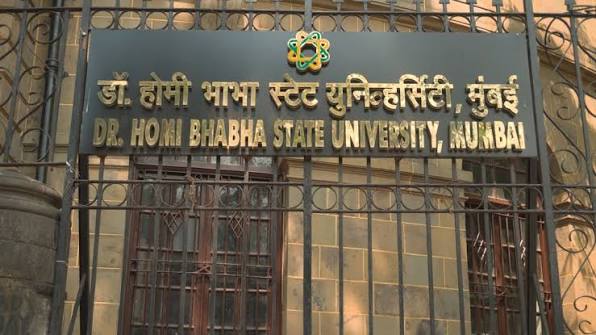
| University Name | Dr. Homi Bhabha State University |
| Common Name | HBSU / Dr. Homi Bhabha State University |
| Established | 2019 |
| Type | State Government Cluster University |
| Location | Mumbai, Maharashtra |
| Headquarters | 15, Madam Cama Road, Mumbai – 400032 |
| Lead Institute | The Institute of Science, Mumbai |
| Constituent Institutions | 6 |
| Academic Structure | Science & Technology, Commerce & Management, Humanities & Social Sciences, Interdisciplinary Studies |
| Programmes | 45 programmes listed in the current programme document |
| Ph.D. | Ph.D. programmes in 20 subjects |
| Recognition | State Government University; UGC-recognised university framework |
| NAAC | Constituent colleges include institutions with NAAC ‘A’ grade; HBSU itself is a relatively new university |
| Official Website | hbsu.ac.in |
HBSU was established as Maharashtra’s first cluster university in 2019. Its current website describes a cluster of constituent institutions with four NAAC ‘A’-grade constituent colleges and a strong focus on skills, internships, industry partnerships and training and placement.
2. Location & Campus
Dr. Homi Bhabha State University is headquartered at 15, Madam Cama Road, Mumbai – 400032. Its academic structure is distributed across its constituent institutions in Mumbai rather than being concentrated on one conventional university campus.
The Institute of Science, Mumbai serves as the lead institute of the university. It is located in South Mumbai’s Fort area, opposite the Chhatrapati Shivaji Maharaj Museum, and occupies a heritage building. The Institute of Science was established in 1920 and has a long history of science education and research.
The cluster model is one of HBSU’s defining characteristics. Students can benefit from the resources and academic offerings of multiple constituent institutions, while the university promotes credit transfer, interdisciplinary learning and a cafeteria-style choice of courses.
3. Admission Information
HBSU has published an Admission Form for 2026–27, with admissions covering programmes offered through its constituent institutions.
Admission requirements vary according to the programme and constituent college. Students should therefore check the specific course notification rather than assuming that one admission route applies to the entire university.
The general admission process involves:
- Checking course eligibility.
- Selecting the relevant constituent institution and programme.
- Completing the prescribed university/college application.
- Appearing for an entrance examination where applicable.
- Following merit-list or selection procedures.
- Completing document verification.
- Paying the prescribed fees.
One of HBSU’s stated advantages is its NEP 2020-compliant academic structure, including credit transfer and the ability to take courses across disciplines.
For Admission Katta, admission information should therefore be stored course-wise and constituent-college-wise, rather than as one generic HBSU admission process.
4. Undergraduate Programmes
HBSU offers undergraduate education across science, technology, commerce, humanities, management and professional areas.
The university’s current programme document lists the following major undergraduate programmes:
Arts & Humanities
- Bachelor of Arts
- B.A. specialisations/subject combinations through Elphinstone College
Science & Technology
- Bachelor of Science
- B.Sc. Information Technology
- B.Sc. Biotechnology
- B.Sc. Data Science
- B.Sc. Artificial Intelligence & Machine Learning
- B.Sc. Data Science & Data Analytics
- B.Sc. Cyber Security & Digital Forensics
- B.Sc. Finance
- B.Sc. Luxury Brand & Retail Management
- B.Sc. Forensic Science
Commerce & Management
- Bachelor of Commerce
- B.Com. Accounting & Finance (BAF)
- B.Com. Management Studies
- B.Com. Banking & Insurance (BBI)
- B.Com. Banking & Financial Analytics
- B.Com. Sports Management
Education
- Bachelor of Education (B.Ed.)
The current official programme list identifies these programmes across Elphinstone College, the Institute of Science, Sydenham College, Secondary Training College and the Institute of Forensic Science.
5. Postgraduate Programmes
HBSU has developed postgraduate programmes across science, technology, commerce, management, psychology, English, forensic science and specialised professional areas.
Science & Technology
Major programmes include:
- M.Sc. Information Technology
- M.Sc. Industrial Biotechnology
- M.Sc. Botany
- M.Sc. Zoology
- M.Sc. Physics
- M.Sc. Microbiology
- M.Sc. Chemistry
- M.Sc. Mathematics
- M.Sc. Biochemistry
- M.Sc. Biotechnology
- M.Sc. Environmental Science
- M.Sc. Data Science
- M.Sc. Forensic Science
The Institute of Science is particularly important for postgraduate science education, with programmes covering traditional sciences as well as biotechnology, environmental science and data science.
Humanities & Social Sciences
- M.A. Applied Psychology – Clinical and Counselling Applications
- M.A. English (Hons.)
Commerce
- M.Com. – Morning
- M.Com. – Evening
- M.Com. Business Analytics & Finance
Management
Through Sydenham Institute of Management Studies, Research and Entrepreneurship Education (SIMSREE):
- Master of Management Studies (MMS)
- Master of Financial Management (MFM)
- Master of Marketing Management (MMM)
The university’s current programme document lists these management programmes under SIMSREE.
Forensic Science & Related Areas
HBSU also offers specialised postgraduate and postgraduate-diploma programmes through the Institute of Forensic Science, including:
- M.Sc. Forensic Science
- PG Diploma in Forensic Science and Related Laws
- PG Diploma in Digital and Cyber Forensics and Related Law
- PG Diploma in Applied Criminalistics and New Criminal Laws
- PG Diploma in Cyber Security and Related Laws
6. Ph.D. / Research Programmes
Research is an important component of HBSU’s academic structure. The university currently states that it offers Ph.D. programmes in 20 subjects.
Research is particularly relevant to the university’s science and technology institutions, including the Institute of Science, as well as its commerce, management and interdisciplinary academic areas.
Research areas can include:
- Chemistry
- Physics
- Mathematics
- Botany
- Zoology
- Microbiology
- Biotechnology
- Biochemistry
- Environmental Science
- Information Technology
- Data-related disciplines
- Commerce
- Management
- Humanities and social sciences
- Other interdisciplinary areas
The university’s current programme information specifically identifies 20 subjects for Ph.D., while its institutional documents describe doctoral education as part of the cluster’s postgraduate and research structure.
For Admission Katta, the exact Ph.D. subject list should be maintained as a separate database field and updated whenever HBSU publishes a new research-admission notification.
7. University Departments & Academic Areas
HBSU follows a multidisciplinary structure built around four broad academic areas:
- Science & Technology
- Commerce & Management
- Humanities & Social Sciences
- Interdisciplinary Studies
The academic ecosystem includes:
Science & Technology
- Physics
- Chemistry
- Mathematics
- Botany
- Zoology
- Microbiology
- Biotechnology
- Biochemistry
- Environmental Science
- Information Technology
- Data Science
- Artificial Intelligence & Machine Learning
- Cyber Security
- Forensic Science
Commerce & Management
- Commerce
- Banking & Finance
- Accounting & Finance
- Management Studies
- Business Analytics
- Financial Management
- Marketing Management
- Sports Management
- Luxury Brand & Retail Management
Humanities & Social Sciences
- English
- Psychology
- History
- Arts and related humanities disciplines
- Education
Interdisciplinary & Emerging Areas
- Forensic Science
- Cyber Forensics
- Criminalistics
- Forensic Science and Law
- Cyber Security and Law
- Data Science
- AI & Machine Learning
This structure makes HBSU particularly relevant to students who want to combine conventional degree subjects with emerging areas such as AI, data science, cyber security, forensic science and business analytics.
8. Campus & Facilities
HBSU’s facilities are distributed across its constituent institutions.
Major facilities and academic resources include:
- Science laboratories
- Research laboratories
- Central and institutional libraries
- Digital learning facilities
- Computer laboratories
- Forensic science laboratories
- Smart classrooms
- Sports facilities
- Hostels at constituent institutions
- Health facilities
- Skill Development Centre
- Seminar and conference facilities
- Research and innovation infrastructure
- Industry interaction and internship opportunities
The university’s annual report records infrastructure such as interactive smart screens, laboratories, libraries, sports facilities and other student-support infrastructure across its constituent institutions.
Skill Development & Industry Exposure
HBSU places considerable emphasis on skills, industry partnerships, internships, training and placement. Its current website also highlights industry-linked, job-ready programmes, technology-mediated learning, entrepreneurship, career counselling and internship opportunities.
The university also operates a Skill Development Center covering areas such as technology, design, marketing, IT/software, business, photography, music and personal development.
9. Affiliated Colleges / Student Life / Career Opportunities
Constituent Colleges
This is an important distinction for Admission Katta.
HBSU is a cluster university and its institutions are constituent colleges/institutes rather than a conventional university-affiliated-college network.
The current university website identifies the following six constituent institutions:
- The Institute of Science, Mumbai – Lead Institute
- Elphinstone College, Mumbai
- Sydenham College of Commerce and Economics, Mumbai
- Secondary Training College, Mumbai
- Institute of Forensic Science, Mumbai
- Sydenham Institute of Management Studies, Research and Entrepreneurship Education (SIMSREE), Mumbai
Several of these institutions have a history extending well beyond the creation of HBSU. For example, the Institute of Science dates to 1920, Sydenham College to 1913 and Secondary Training College to 1906.
Do not label these as “affiliated colleges” in the Admission Katta database. They should be classified as Constituent Institutions of HBSU.
Student Life
The cluster structure creates an unusual student experience compared with a conventional single-campus university.
Students can participate in:
- Academic clubs
- Cultural activities
- Sports
- NSS and community activities
- Seminars and workshops
- Research projects
- Internships
- Industry interactions
- Entrepreneurship activities
- Skill-development programmes
- Interdisciplinary courses
HBSU’s NEP-oriented structure also promotes flexibility in course selection and credit transfer across constituent institutions.
Career & Placement Opportunities
Career opportunities differ substantially according to the constituent institution and programme.
Students can pursue careers in:
- Scientific research
- Biotechnology
- Data science
- Artificial intelligence
- Cyber security
- Forensic science
- IT
- Commerce and finance
- Banking
- Management
- Marketing
- Education
- Psychology
- Research and academia
- Government services
- Entrepreneurship
SIMSREE is particularly relevant for management aspirants, while the Institute of Science has strong science and research orientation and the Institute of Forensic Science provides specialised pathways into forensic and cyber-forensic fields.
HBSU itself highlights internships, industry partnerships, training and placement as key features of its university model.
Maps
Photos