1. Basic Information
| Particular | Details |
|---|---|
| University Name | Yashwantrao Chavan Maharashtra Open University |
| Short Name | YCMOU |
| Established | 1 July 1989 |
| Type | State Public Open University |
| Location | Nashik, Maharashtra |
| University Category | Open & Distance Learning University |
| Jurisdiction | Entire State of Maharashtra |
| Campus | Dnyangangotri, Nashik |
| Campus Area | 147 acres |
| Regional Centres | 8 |
| Learner Support Centres | 1,711 |
| Academic Programmes | 120+ |
| UGC Status | Recognised under Section 12(B) of the UGC Act |
| Official Website | ycmou.ac.in |
Yashwantrao Chavan Maharashtra Open University (YCMOU) is Maharashtra’s dedicated open university, established on 1 July 1989 under an Act of the Maharashtra State Legislature. It is the fifth open university established in India and has its headquarters in Nashik. The university’s jurisdiction extends across the entire state of Maharashtra.
YCMOU was established with the idea of making higher education accessible to learners who may not be able to follow the traditional full-time college system. Its philosophy is built around “Reach the Unreached”, flexible learning, lifelong education and the use of technology to expand access to higher education.
2. Location & Campus
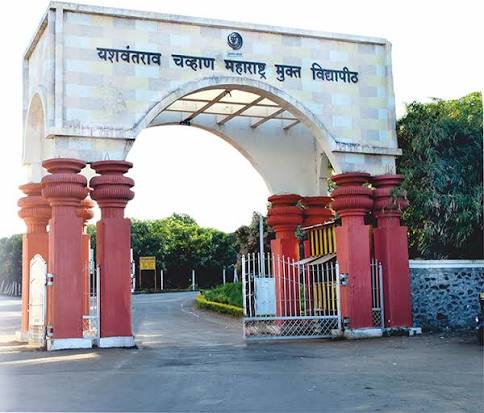
YCMOU is headquartered at Dnyangangotri, Nashik, with its main campus spread across approximately 147 acres near Gangapur Dam. The green campus serves as the university’s administrative and academic headquarters.
The university’s reach, however, extends far beyond its Nashik campus. YCMOU operates through eight Regional Centres located at Nashik, Pune, Mumbai, Kolhapur, Chhatrapati Sambhajinagar, Nanded, Amravati and Nagpur.
These regional centres support learners in different parts of Maharashtra and work with a large network of Learner Support Centres (LSCs). The current university information lists 1,711 Learner Support Centres across the state.
This extensive network is one of YCMOU’s biggest advantages for students who want to pursue higher education while living in their hometown, working or managing other responsibilities.
3. Admission Information
YCMOU follows an open and distance learning model, making its admission system different from that of conventional universities. Students can apply for eligible programmes through the university’s online admission system and study with support from designated Learner Support Centres.
The university currently provides an online application process for the July 2026 academic session, along with the corresponding academic prospectus.
Depending on the programme, admission may be based on:
- Academic eligibility
- Previous educational qualification
- Programme-specific requirements
- Entrance examination, wherever applicable
- Additional requirements prescribed by regulatory bodies
YCMOU offers programmes at certificate, diploma, undergraduate, postgraduate and doctoral levels. The university’s open-learning approach is particularly useful for working professionals, in-service employees, students from remote areas and learners looking for flexible study options.
Students should check the latest programme-specific prospectus before applying because eligibility, admission procedure, fees and programme availability may differ from one course to another.
4. Undergraduate Programmes
YCMOU offers a broad selection of undergraduate programmes across humanities, commerce, management, science, education, computer applications, agriculture and other areas.
Major undergraduate programmes include:
- Bachelor of Arts (B.A.)
- Bachelor of Commerce (B.Com.)
- B.A. Mass Communication & Journalism
- B.Com. Cooperative Management
- Bachelor of Computer Applications (B.C.A.)
- Bachelor of Library & Information Science (B.Lib. & I.Sc.)
- Bachelor of Education (B.Ed.)
- B.Ed. Special Education
- B.B.A.
- B.Sc. programmes
- B.Sc. Hospitality Studies
- Agriculture-related programmes
- Vocational and skill-based undergraduate programmes
- Other specialised programmes offered under different schools
For example, the current 2026–27 programme listings include B.A., B.Com., B.A. (MCJ), B.C.A., B.Lib. & I.Sc. and B.Ed., along with several science and specialised programmes.
The university’s undergraduate programmes are designed to provide flexibility to learners who may prefer distance, blended or technology-supported education instead of attending a conventional college every day.
5. Postgraduate Programmes
YCMOU offers postgraduate programmes across humanities, social sciences, commerce, management, science, education and other specialised disciplines.
Major postgraduate areas include:
- M.A. Marathi
- M.A. Hindi
- M.A. History
- M.A. Economics
- M.A. Public Administration
- M.A. Urdu
- M.A. Education
- M.Com.
- M.B.A.
- M.Lib. & I.Sc.
- M.Sc. Mathematics
- M.Sc. Physics
- M.Sc. Chemistry
- M.Sc. Botany
- M.Sc. Zoology
- M.Sc. Environmental Science
- Other specialised postgraduate programmes
The current programme structure shows postgraduate offerings across the School of Humanities & Social Sciences, School of Commerce & Management, School of Education, School of Sciences and other academic schools.
YCMOU also offers flexible management education, including an Online MBA for the 2026–27 academic year.
6. Ph.D. / Research Programmes
YCMOU has an active research and doctoral education system covering several academic disciplines.
Ph.D. and research activities are conducted through recognised schools, research centres and research supervisors. Current university research structures include areas such as:
- Humanities & Social Sciences
- Commerce & Management
- Education
- Agricultural Sciences
- Sciences
- Computer Sciences
- Health Sciences
- Continuing Education
- Other recognised research areas
The university has a University Research Council (URC) responsible for supporting and coordinating research activities. YCMOU also maintains recognised research guides and has a dedicated Prof. Ram Takwale Research and Development Center (RT-RDC) focusing on educational communication and distance education.
The university’s current research framework includes a Ph.D. Ordinance 2025, along with research policies covering faculty and student research projects, publication ethics and research support.
Students interested in doctoral study should check the latest Ph.D. admission notification for the available subjects, eligibility, entrance requirements and recognised research centres.
7. University Departments & Academic Areas
YCMOU has developed a wide academic structure to support different categories of learners. Its schools cover traditional academic subjects as well as professional, vocational and emerging areas.
School of Humanities & Social Sciences
This school covers areas such as:
- Marathi
- Hindi
- Urdu
- History
- Economics
- Public Administration
- Mass Communication & Journalism
- Arts and social sciences
The school focuses on humanities, society, culture, literature and human development.
School of Commerce & Management
The school offers programmes in:
- Commerce
- Management
- Business Administration
- Cooperative Management
- Other business-related areas
The school is particularly known for its flexible B.Com. and MBA programmes within the open-learning system.
School of Education
The School of Education focuses on teacher education and education-related programmes, including B.Ed. and postgraduate education programmes. Its B.Ed. programme was designed specifically with the needs of in-service teachers and flexible learning in mind.
School of Sciences
The School of Sciences offers programmes in subjects including:
- Mathematics
- Physics
- Chemistry
- Botany
- Zoology
- Environmental Science
The school currently offers certificate, diploma, undergraduate, postgraduate and doctoral-level science programmes.
School of Agricultural Sciences
YCMOU also has a dedicated School of Agricultural Sciences, reflecting the university’s emphasis on accessible education for rural communities and agriculture-related learners.
School of Computer Sciences
The university offers computer-related programmes including Bachelor of Computer Applications (BCA) and other computer-science and technology-oriented academic opportunities.
Other Academic Areas
YCMOU’s current academic structure also includes:
- School of Health Sciences
- School of Continuing Education
- School of Digital Education
- School of Multidisciplinary Studies
- School of Rural Development & Entrepreneurship
- School of Vocational Education & Skill Development
- Centre for Performing Arts
- Prof. Ram Takwale Research and Development Center
- Krishi Vigyan Kendra
The School of Vocational Education & Skill Development, established in 2024, focuses on employment-oriented, skill-based and industry-relevant education.
8. Campus & Facilities
YCMOU’s facilities are designed around its open and distance learning model rather than the traditional residential university model.
Important facilities and learner-support services include:
- University library
- Digital learning resources
- Online admission services
- Learning support through Learner Support Centres
- Regional Centres
- Academic counselling
- Digital education resources
- Student support services
- Examination services
- Research facilities
- Student welfare activities
- Sports and cultural activities
- Skill-development facilities
- Agricultural learning and extension facilities
The university uses technology extensively to support learners who may not be able to attend regular classroom teaching. Its model combines self-learning resources, counselling and technology-enabled instruction with support from regional and learner-support centres.
YCMOU also conducts sports, cultural and competitive activities through its Student Welfare and Extra-curricular Center, helping create opportunities for student development beyond academics.
9. Affiliated Colleges / Student Life / Career Opportunities
Unlike a conventional affiliating university such as SPPU or Mumbai University, YCMOU’s academic model is built around Regional Centres and Learner Support Centres rather than a conventional network of affiliated colleges.
The university currently operates through 8 Regional Centres and 1,711 Learner Support Centres across Maharashtra. The university states that these centres support more than 120 academic programmes, with an average of around 2.5 lakh new students registering every year.
Learner Support Centres are particularly important for YCMOU students because they provide local academic support, counselling and other services while the university centrally manages the academic framework, examinations and certification.
Career Opportunities
Career opportunities after completing a YCMOU programme depend on the course and the learner’s career goals. Graduates and postgraduates can pursue opportunities in:
- Government and public-sector organisations
- Private companies
- Banking and financial services
- Business and management
- Education and teaching
- Journalism and mass communication
- Computer applications and IT
- Commerce and accounting
- Agriculture and rural development
- Library and information services
- Hospitality
- Social-sector organisations
- Entrepreneurship
- Higher education and research
One of YCMOU’s biggest advantages is flexibility. Students can pursue education while working, managing family responsibilities or living away from major educational centres. This makes the university particularly relevant to working professionals, rural learners and students who require a non-traditional route to higher education.
For Admission Katta, YCMOU should be treated as a separate Open University profile, with individual programme pages linked beneath it rather than treating its Learner Support Centres as conventional affiliated colleges.
Maps
Photos